Onion Crop Management: A Practical Guide for Young Onion Farmers
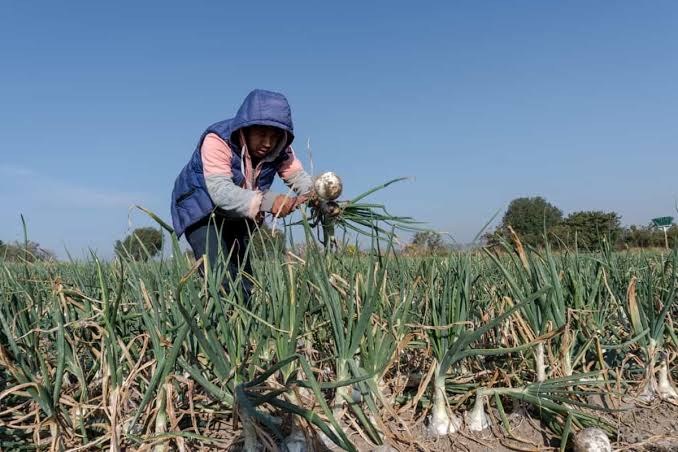
Growing healthy onions does not end after transplanting. The way you manage your onion field after transplanting can determine whether you harvest large, healthy bulbs or small, poor-quality onions.
Young farmers should pay close attention to watering, weeding, nutrition, spacing, mulching and pest management throughout the growing season.
1. How to Care for Onion Plants After Transplanting
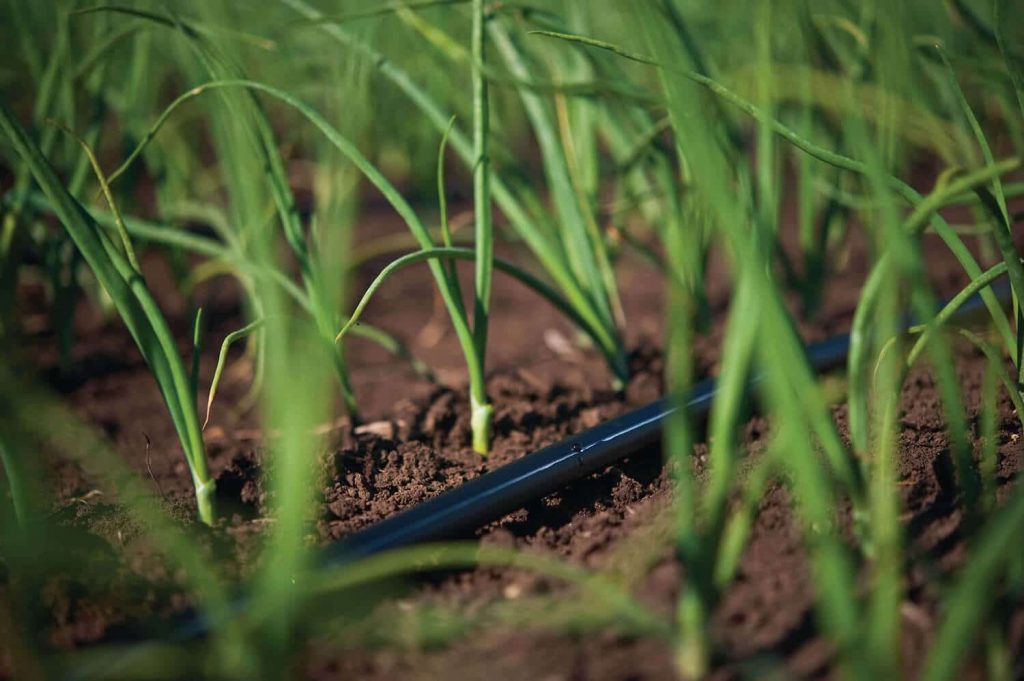
The first few weeks after transplanting are very important because the seedlings are still recovering from transplanting stress.
What you should do:
- Water immediately after transplanting to help the roots settle into the soil.
- Keep the soil moist but not waterlogged.
- Check the field regularly for seedlings that have died and replace them early.
- Remove weeds before they become established.
- Avoid damaging the young roots when cultivating around the plants.
- Monitor the plants for insects, diseases and signs of nutrient deficiency.
- Apply fertilizer according to your soil condition and the crop’s growth stage.
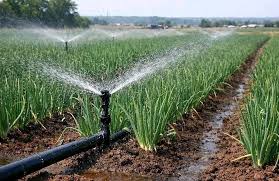
Do not assume that more water or fertilizer automatically means bigger onions. Onion plants need balanced management, not excessive inputs.
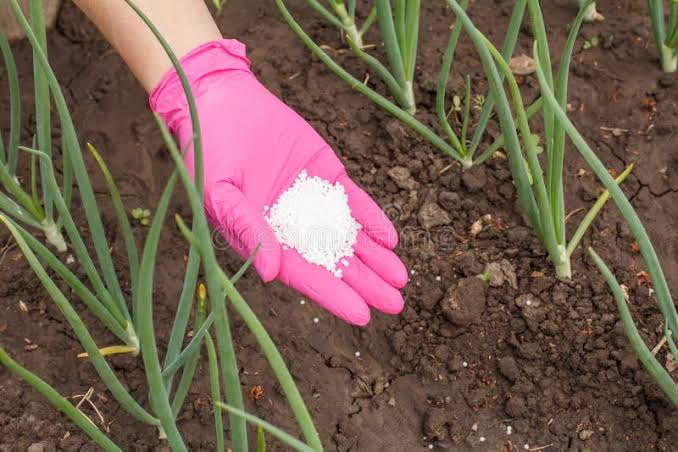
2. How to Control Weeds in Onion Farming
Weeds compete with onions for water, nutrients, sunlight and space. Because onions have relatively shallow roots, heavy weed competition can seriously reduce bulb development.
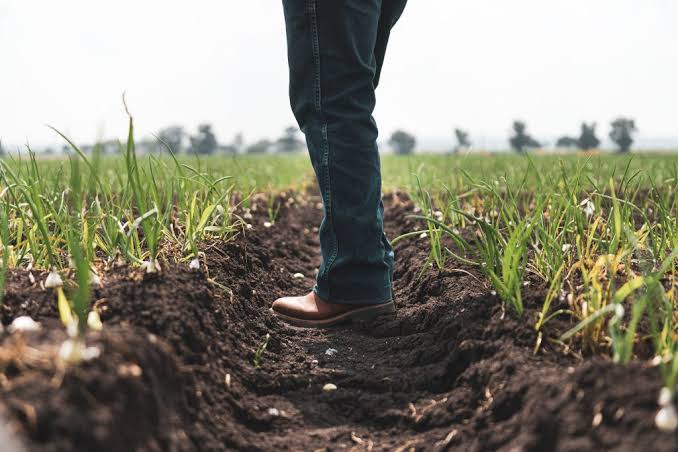
Good weed-control practices
Early weeding:
Remove weeds while they are still small. Young weeds are much easier to control than mature weeds.
Hand weeding:
For small farms, carefully remove weeds by hand or with a suitable hand tool.
Shallow cultivation:
If using a hoe, avoid digging deeply close to onion plants because onion roots are shallow and can easily be damaged.
Mulching:
A suitable mulch can reduce weed emergence and conserve soil moisture.
Herbicides:
Where herbicides are used, select only products properly registered and recommended for onion production in your area. Always follow the product label and recommended application rate.
Important lesson
Do not wait until the onion field becomes completely covered with weeds before taking action. Weed early and regularly.
3. Best Mulching Materials for Onions
Mulching can be useful in onion production when properly managed. It helps reduce weed growth, conserve soil moisture and protect the soil surface from excessive heat.
Possible materials include:
- Clean dry grass
- Rice straw
- Well-dried plant residues
- Other clean, disease-free organic materials suitable for agricultural use
Be careful with mulch
Do not use materials that contain weed seeds, disease-causing organisms or harmful chemicals.
Also avoid placing thick, wet organic material directly against the onion plants because it can encourage excessive moisture around the plant and create conditions favorable for disease.
Apply mulch in a thin, even layer, leaving appropriate space around the onion plants.
4. How to Improve Onion Bulb Size
If you want large, marketable bulbs, you must manage the crop properly from the beginning.
Give the plants enough space
Correct spacing allows each onion plant to receive adequate sunlight, water and nutrients.
Overcrowding can produce smaller bulbs because plants compete with each other.
Provide adequate nutrition
Onions need balanced nutrients throughout their growth. Nitrogen is important for leaf development, but excessive nitrogen—especially late in the season—can encourage excessive leaf growth and delay proper bulb maturation.
Phosphorus and potassium also play important roles in root development, plant growth and bulb development.
Maintain proper moisture
Onions need consistent moisture during active growth and bulb development. Both drought stress and excessive watering can reduce crop performance.
Control weeds
A heavily weed-infested field can compete strongly with onion plants and reduce bulb development.
Choose suitable varieties
Some onion varieties naturally produce larger bulbs than others under suitable growing conditions. Choose varieties adapted to your climate, soil and production season.
5. Why Are Onion Bulbs Small?
Small bulbs can result from several problems.
Common causes include:
- Poor-quality or unsuitable variety
- Planting too closely
- Poor soil fertility
- Weed competition
- Inadequate irrigation
- Excessive waterlogging
- Transplanting weak or over-aged seedlings
- Pest or disease damage
- Planting at an unsuitable time
- Insufficient sunlight
- Poor field preparation
Before adding more fertilizer, find out what is actually causing the poor bulb development.
For example, if the plants are overcrowded, adding more fertilizer will not solve the spacing problem.
6. Why Are Onion Plants Not Forming Bulbs?
Bulb formation depends on several factors, particularly variety, day length, temperature, plant health and nutrition.
Possible causes include:
Wrong variety
Different onion varieties respond differently to day length. A variety that performs well in one region may not bulb properly under different conditions.
Excessive nitrogen
Too much nitrogen can keep the plant focused on leaf production instead of moving properly toward bulb maturation.
Poor plant growth
Plants weakened by pests, diseases, drought or poor nutrition may struggle to produce good bulbs.
Incorrect planting conditions
Planting outside the recommended period for a particular variety can affect bulb development.
Crowding
Plants that are too close together may compete heavily and produce smaller bulbs.
Young farmers should therefore choose the right variety for their location and production season rather than simply buying any onion seed available.
7. How to Prevent Onion Plants From Flowering Too Early
When an onion produces a flower stalk instead of developing a good bulb, it is often called bolting.
Early bolting can be influenced by environmental conditions, especially temperature, variety and plant age.
Ways to reduce the risk
- Choose varieties suitable for your production area.
- Avoid using seedlings that have become excessively old before transplanting.
- Follow recommended planting periods.
- Maintain good crop nutrition without excessive nitrogen.
- Reduce unnecessary stress from drought or poor field management.
- Select quality seed from a reliable source.
Once an onion has bolted, the plant may produce a poorer-quality bulb that does not store as well. Therefore, prevention is better than trying to correct the problem after flowering has started.
8. A Simple Management Routine for Young Onion Farmers
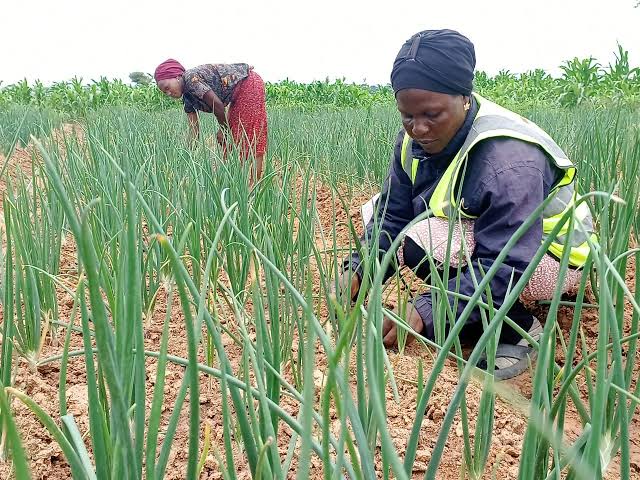
Make it a habit to walk through your onion farm regularly.
During each inspection, check:
- Leaves: Are they green and healthy?
- Soil: Is it too dry or waterlogged?
- Weeds: Are weeds competing with the crop?
- Pests: Are insects damaging the leaves?
- Diseases: Are there spots, rotting or unusual discoloration?
- Spacing: Are plants overcrowded?
- Growth: Are bulbs beginning to develop normally?
- Nutrition: Are there signs of nutrient deficiency?
- Flowering: Are plants producing flower stalks earlier than expected?
Regular observation allows you to identify problems before they become expensive problems.
Final Advice for Young Onion Farmers
Successful onion farming is not about planting the crop and waiting until harvest. It requires regular observation and timely management.
Focus on good transplanting, proper spacing, weed control, balanced fertilization, consistent moisture, suitable mulching, pest and disease monitoring, and the correct onion variety.
Most importantly, when your onions are not growing well, do not immediately assume that fertilizer is the answer. Look at the whole field and identify the real cause first.
A young farmer who learns to observe the crop carefully will make better decisions, reduce unnecessary costs and have a much better chance of producing large, healthy and marketable onion bulbs.
Leave a Reply