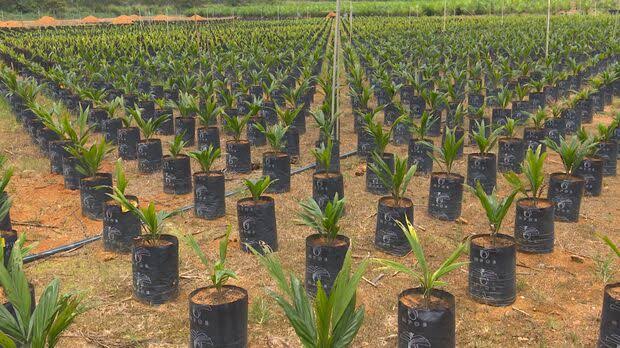
Oil Palm Nursery Business in Nigeria: Cost and Profit
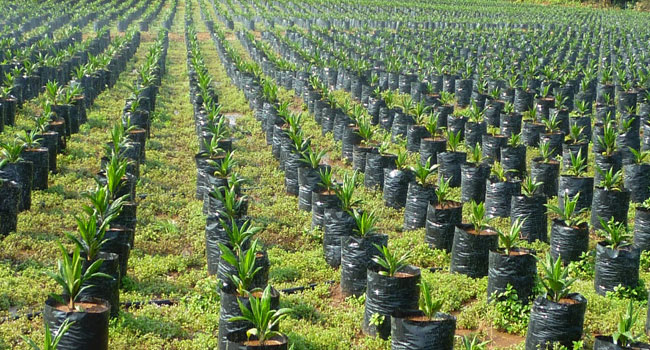
Starting an oil palm nursery can be a profitable agricultural business in Nigeria, especially as more farmers establish new oil palm plantations. Unlike owning a mature oil palm plantation, a nursery business allows you to generate income by producing and selling healthy seedlings to farmers.
However, success does not simply depend on planting many seeds. You need genuine planting material, good nursery management, adequate water, proper weed control, healthy polybags, labour and a reliable market.
This guide explains how a young farmer can start an oil palm nursery business, the major costs involved, possible income and the important mistakes to avoid.
What Is an Oil Palm Nursery Business?
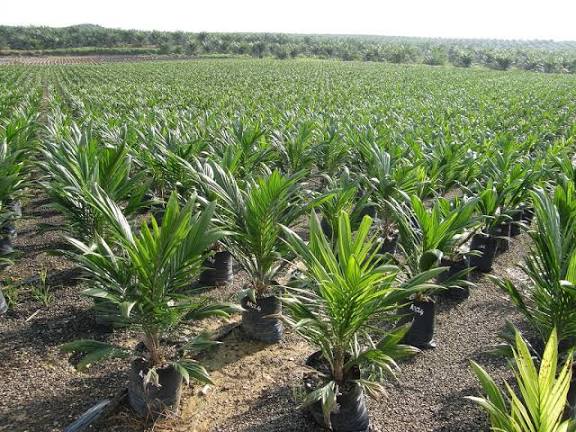
An oil palm nursery is a farm operation where oil palm planting materials are raised from germinated seeds until they become strong seedlings suitable for transplanting into the field.
A commercial nursery may operate at two stages:
- Pre-nursery: Young germinated seeds are initially raised under carefully managed conditions.
- Main nursery: Strong seedlings are transferred into larger polybags and grown until they are ready for field planting.
The nursery owner then sells suitable seedlings to plantation farmers, estate owners, cooperatives and other agricultural investors.
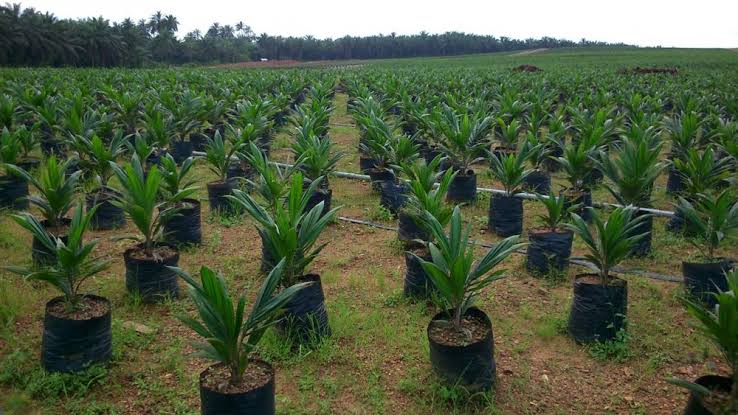
The important point is that a nursery business is different from establishing your own oil palm plantation. Instead of waiting several years for palms to produce fruit, the nursery operator can sell planting materials much earlier.
Why Oil Palm Nursery Business Can Be Attractive in Nigeria
Oil palm remains an important agricultural crop in Nigeria, particularly in areas with suitable rainfall, soil and climate.
A farmer establishing a new plantation may need hundreds of seedlings depending on the size and spacing of the farm.
For example, a farmer establishing several hectares may require thousands of seedlings. This creates a potential market for nurseries that can consistently supply healthy and properly raised planting materials.
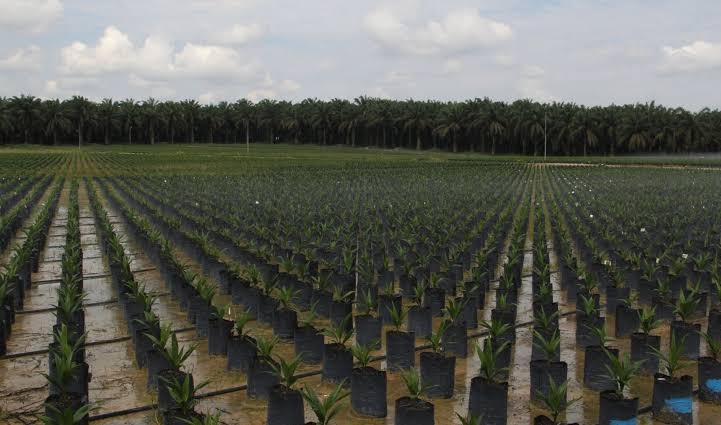
The opportunity is particularly strong when you build relationships with:
- Smallholder farmers
- Large plantation investors
- Agricultural cooperatives
- Farm settlement projects
- Estate owners
- Agricultural organisations
- Local farm-input businesses
- Commercial plantation developers
However, demand does not automatically mean profit. Your nursery must produce seedlings that farmers trust.
Start With Genuine Oil Palm Planting Material
One of the biggest mistakes a new nursery operator can make is buying questionable seeds simply because they are cheap.
For commercial nursery production, planting material should come from a reliable and traceable source.
Farmers often look for Tenera planting material because of its desirable production characteristics. But you should not tell customers that a seedling can always be identified as genuine Tenera simply by looking at its leaves.
Instead, maintain documentation showing the source of your planting material.
When purchasing seeds or germinated materials, ask:
- Who produced the planting material?
- Is the source reputable?
- Is there documentation or traceability?
- What variety or genetic material is being supplied?
- How old is the planting material?
- What nursery-management instructions come with it?
Your reputation as a nursery operator depends heavily on the quality and authenticity of what you sell.
How Much Does It Cost to Start an Oil Palm Nursery?
There is no single fixed startup cost for every nursery in Nigeria.
Your cost will depend on the number of seedlings you want to produce, land availability, water source, labour costs, polybag prices, planting-material prices and whether you already have nursery infrastructure.
A small nursery may require considerably less capital than a commercial nursery producing thousands or tens of thousands of seedlings.
Your major expenses can include:
| Expense | What It Covers |
|---|---|
| Planting material | Germinated seeds or approved planting materials |
| Polybags | Nursery bags for raising seedlings |
| Nursery land | Preparation and maintenance of nursery area |
| Water supply | Borehole, tank, pump, hose or other water system |
| Labour | Filling bags, planting, watering, weeding and maintenance |
| Soil/media | Suitable soil and other approved materials where required |
| Shade materials | Particularly important during early nursery stages |
| Fertilizer | Nutrient management according to nursery requirements |
| Pest and disease management | Monitoring and appropriate control |
| Tools | Hoes, cutlasses, watering equipment and other tools |
| Transport | Moving inputs and delivering seedlings to customers |
| Losses | Allowance for seedlings that fail or are rejected |
The best approach is to prepare your budget per seedling rather than simply calculating the total amount you want to spend.
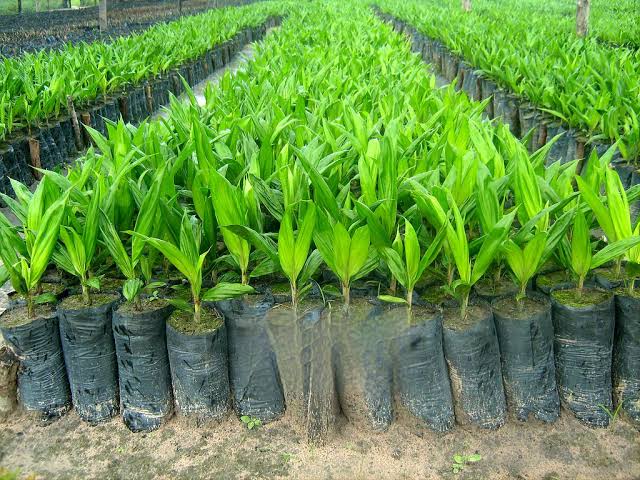
Example of a Simple Nursery Cost Calculation
Suppose you plan to raise 5,000 seedlings.
Do not assume that all 5,000 will automatically become saleable seedlings.
You should budget for nursery losses and quality rejection.
For illustration, imagine your total production expenditure works out to ₦700 per seedling.
If you spend ₦700 × 5,000 seedlings:
Total production cost = ₦3,500,000
But this is only an example. Actual costs can be significantly higher or lower depending on current Nigerian prices and your location.
You should obtain current quotations for:
- Seeds
- Polybags
- Labour
- Fertilizer
- Water
- Transportation
- Farm tools
- Nursery infrastructure
before investing.
How to Calculate Your Potential Nursery Profit
The basic calculation is straightforward:
Profit = Total Sales − Total Production Costs
For example, suppose you successfully produce and sell 4,500 marketable seedlings at an average selling price of ₦1,500 each.
Sales would be:
4,500 × ₦1,500 = ₦6,750,000
If your total production and operating cost was ₦3,500,000:
Estimated gross profit = ₦6,750,000 − ₦3,500,000
Estimated gross profit = ₦3,250,000
This is only an illustration, not a guaranteed market profit.
Your actual profit will depend on your selling price, production efficiency, mortality rate, labour costs, input prices and ability to sell the seedlings.
Why You Should Not Calculate Profit From Every Seedling Planted
A common mistake among beginners is assuming:
Number planted = Number sold
That is not always true.
Some seedlings may:
- Die
- Become weak
- Develop abnormal growth
- Suffer pest or disease problems
- Become unsuitable for field planting
- Be damaged during transportation
- Remain unsold
Therefore, calculate your business using the number of marketable seedlings, not simply the number of seeds initially planted.
For example:
5,000 seedlings planted does not necessarily mean 5,000 seedlings sold.
This distinction can make a major difference when calculating profitability.
How to Set Your Selling Price
Do not copy another nursery’s selling price blindly.
First calculate your production cost per marketable seedling.
For example:
Total nursery expenses ÷ Number of saleable seedlings = Cost per saleable seedling
If your cost per saleable seedling is ₦900, selling at ₦950 may leave very little room for unexpected expenses.
Your selling price should consider:
- Production cost
- Seedling quality
- Age and size
- Source of planting material
- Transportation
- Local market demand
- Quantity purchased
- Season
- Competition
- Your profit margin
Bulk customers may negotiate lower prices, but they can also provide valuable volume sales.
Quality Is More Important Than Producing Huge Numbers
A nursery business should not focus only on quantity.
Farmers buying seedlings are making a long-term investment. They expect planting materials that are healthy, vigorous and suitable for field establishment.
Poor-quality seedlings can damage your reputation very quickly.
Before selling, inspect seedlings for obvious problems such as:
- Poor growth
- Severe pest damage
- Disease symptoms
- Deformed leaves
- Weak stems
- Serious nutrient deficiency
- Poor root development
- Abnormal growth
Seedlings that do not meet your quality standards should not be mixed with good planting materials simply to increase sales.
Water Is One of the Most Important Nursery Investments
A nursery should have a dependable water supply.
Do not establish thousands of seedlings in a location where you depend entirely on uncertain rainfall.
Young oil palm seedlings require proper moisture management, particularly during dry periods.
Depending on the location and scale of the nursery, your water system could involve:
- Borehole
- Storage tank
- Pump
- Hose
- Watering equipment
- Reliable alternative water source
Water infrastructure can represent a significant part of your initial investment, but it can also protect the nursery from severe losses during dry conditions.
Choose the Nursery Location Carefully
Your nursery should be located where the environment supports healthy seedling development and where you can manage the nursery efficiently.
Consider:
- Water availability
- Soil conditions
- Drainage
- Accessibility
- Security
- Labour availability
- Distance to customers
- Transportation costs
- Protection from animals
A nursery that produces excellent seedlings but is difficult for customers to reach can face unnecessary transportation challenges.
Pre-Nursery Management
The pre-nursery is the early stage of development.
At this stage, young planting materials need careful attention because they are still vulnerable.
Important management activities include:
- Proper watering
- Weed control
- Protection from excessive stress
- Regular inspection
- Proper spacing
- Pest monitoring
- Removal of severely abnormal seedlings
Do not neglect young seedlings simply because they are small. Problems that begin at this stage can affect their later performance.
Main Nursery Management
Once seedlings are sufficiently established, they can be moved into the main nursery according to the recommended nursery procedure for the planting material.
The main nursery requires continuous management.
This includes:
- Regular watering
- Weed control
- Fertilizer management
- Pest and disease monitoring
- Removing abnormal seedlings
- Maintaining adequate spacing
- Protecting seedlings from physical damage
- Keeping accurate nursery records
A commercial nursery should have someone inspecting the seedlings regularly rather than waiting until problems become obvious.
Weed Control
Weeds compete with young palms for:
- Water
- Nutrients
- Space
- Light
Weeds can also make it harder to inspect the nursery and identify pest or disease problems.
Keep the nursery clean through appropriate manual or other suitable weed-management practices.
Be careful with herbicides. Incorrect products, concentrations or application methods can damage young seedlings.
Fertilizer Management
Young oil palm seedlings need nutrients for proper growth, but fertilizer should not be applied randomly.
Too little nutrition can result in poor growth, while inappropriate or excessive fertilizer application can damage seedlings.
The fertilizer programme should take into account:
- Seedling age
- Soil characteristics
- Planting material
- Nursery conditions
- Nutrient deficiencies
- Recommendations from qualified agronomists or reliable technical sources
Where possible, soil analysis and proper technical guidance can help you develop a more appropriate nutrient-management programme.
Keep Nursery Records
A serious nursery business should maintain records from the beginning.
Record:
- Number of seeds received
- Source of planting material
- Date received
- Number planted
- Germination
- Mortality
- Fertilizer applications
- Pest or disease observations
- Labour expenses
- Other expenses
- Number of seedlings available for sale
- Number sold
- Customer information
- Selling price
Good records allow you to determine whether your nursery is genuinely profitable.
Find Customers Before the Seedlings Are Ready
One of the biggest risks is producing thousands of seedlings without having enough buyers.
Start marketing early.
You can reach potential customers through:
- Farmer associations
- WhatsApp agricultural groups
- Facebook farming communities
- Local agricultural markets
- Cooperative societies
- Plantation owners
- Agricultural extension networks
- Word-of-mouth referrals
- Your own farm website or social media pages
Take photographs of your nursery and document the development of your seedlings.
When farmers can see that you have a properly managed nursery, it can increase their confidence.
Build Trust With Your Customers
Trust is one of the most valuable assets in the seedling business.
Be honest about:
- Seedling age
- Planting-material source
- Quantity available
- Price
- Expected delivery date
- Transportation charges
- Seedling quality
Do not advertise ordinary seedlings as premium genetic material simply to charge a higher price.
One disappointed customer can affect many future sales because farmers often share information within their communities.
Selling in Bulk Can Improve Your Business
Instead of relying entirely on individual farmers buying 20 or 50 seedlings, you can target larger customers.
For example:
A plantation investor may need hundreds or thousands of seedlings.
A cooperative may organise a bulk purchase for its members.
A large order can reduce your marketing cost per seedling and help you move inventory faster.
However, large customers may negotiate prices, so calculate your margins carefully before accepting an order.
Transportation Can Affect Your Profit
Seedlings are living planting materials, not ordinary products.
Moving them over long distances can increase costs and may cause damage if handled poorly.
When calculating your selling price, determine whether:
The customer collects the seedlings
or
You deliver the seedlings to the farm.
If you offer delivery, calculate:
- Vehicle hire
- Fuel
- Labour
- Loading
- Unloading
- Distance
- Possible seedling losses
Do not promise free delivery unless your selling price already covers the cost.
Common Mistakes Young Nursery Operators Should Avoid
1. Buying Cheap, Unverified Planting Material
Cheap planting material can become expensive if customers reject the resulting seedlings or if the genetic quality is questionable.
2. Starting Too Large
A beginner does not necessarily need to start with 20,000 or 50,000 seedlings.
It may be better to understand nursery management and establish a reliable customer base before expanding.
3. Ignoring Water
A shortage of water can cause severe nursery losses during dry periods.
4. Poor Record Keeping
Without records, you may think you are making money when you are actually losing money.
5. Selling Weak Seedlings
Do not sacrifice quality simply because you want to sell every seedling.
6. Producing Without a Market
Before expanding production, investigate how many farmers are likely to buy from you.
7. Underestimating Labour
Watering, weeding, filling polybags, transplanting, sorting and general maintenance can require significant labour.
8. Forgetting Transportation Costs
The cost of delivering thousands of seedlings can significantly affect your profit.
Is Oil Palm Nursery Business Profitable in Nigeria?
Yes, it can be profitable, but profitability is not guaranteed.
The strongest businesses usually combine:
Quality planting material + good nursery management + controlled costs + reliable customers.
A nursery producing excellent seedlings but with no market can lose money.
Similarly, a nursery with many customers but poor-quality seedlings can damage its reputation and eventually lose those customers.
The goal should therefore be to build a nursery that farmers trust.
Small Nursery or Large Nursery: Which Should You Start?
For a young farmer entering the business for the first time, starting at a manageable scale can be sensible.
A smaller nursery allows you to learn:
- How to manage seedlings
- How much labour you actually need
- How much water is required
- Your real cost per seedling
- How many seedlings survive
- How customers behave
- How transportation affects costs
After gaining experience and establishing customers, you can expand production.
Simple Example of a Nursery Business Model
Imagine you decide to establish a nursery targeting 5,000 seedlings.
Your business plan should answer:
- How much will planting material cost?
- How much will polybags cost?
- How much will labour cost?
- How much will water infrastructure cost?
- How much fertilizer and other inputs will be required?
- What percentage of seedlings do you expect to become marketable?
- What price can you realistically obtain per seedling?
- Who will buy them?
- How much will transportation cost?
- How much money will remain after all expenses?
This is much better than simply saying, “I will raise 5,000 seedlings and sell them for ₦X.”
How to Make Your Nursery Business More Profitable
You can improve profitability by:
- Buying quality planting material from reliable sources
- Reducing unnecessary seedling mortality
- Controlling labour costs
- Using water efficiently
- Maintaining good nursery hygiene
- Keeping accurate financial records
- Selling directly to farmers where practical
- Developing bulk customers
- Marketing before seedlings reach selling age
- Avoiding unnecessary infrastructure expenses
- Maintaining consistent seedling quality
The objective is not simply to sell at the highest price. It is to produce quality seedlings at a controlled cost and sell them consistently.
Final Advice for Young Farmers
Oil palm nursery business can be an interesting agricultural enterprise for a young Nigerian farmer because it serves other farmers who want to establish plantations.
But do not enter the business believing that every seedling automatically equals profit.
Your real business is built around quality, survival rate, cost control and customers.
Before starting, study the oil palm farmers in your area. Find out how many are planning to establish plantations, how many seedlings they need, what prices are available and which planting-material suppliers they trust.
Then start with a scale you can manage properly.
A nursery with 2,000 healthy and trusted seedlings can be more valuable to your business reputation than one with 10,000 poorly managed seedlings.
If you consistently supply healthy, properly raised and traceable planting materials, your nursery can grow from a small farm project into a serious agricultural business.
Remember: nursery profitability should always be calculated using your actual local costs and the number of marketable seedlings sold, not simply the number of seeds planted.
Leave a Reply