How Much Palm Oil Can 1 Hectare Produce in Nigeria?
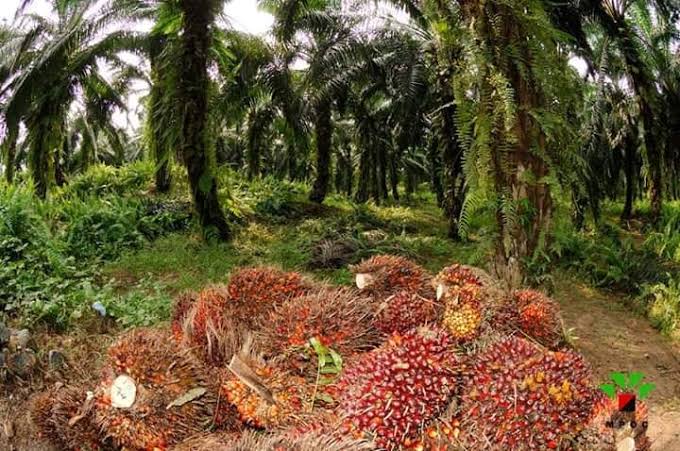
If you are planning to start an oil palm plantation in Nigeria, one of the first questions you may ask is: how much palm oil can I get from one hectare?
The answer depends on several factors, including the variety planted, age of the palms, soil fertility, rainfall, fertilizer management, weed control, pest and disease management, harvesting practices and the efficiency of the processing mill.
For this reason, a young farmer should not expect every one-hectare plantation to produce the same quantity of fruit or palm oil.
The best way to understand production is to look at Fresh Fruit Bunches (FFB) first, and then calculate approximately how much crude palm oil can be extracted from those bunches.
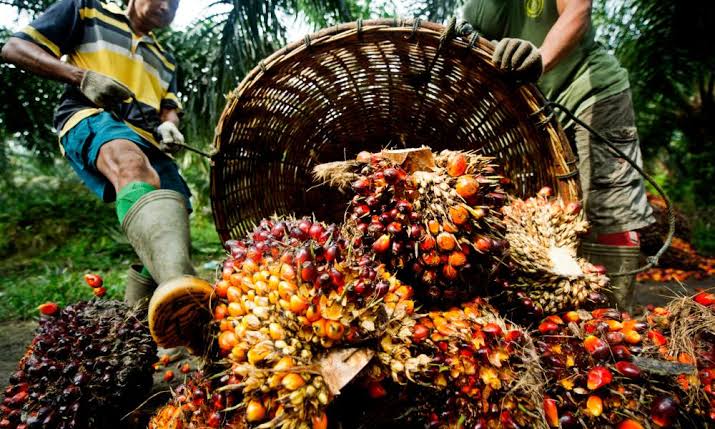
How Much FFB Can 1 Hectare Produce?
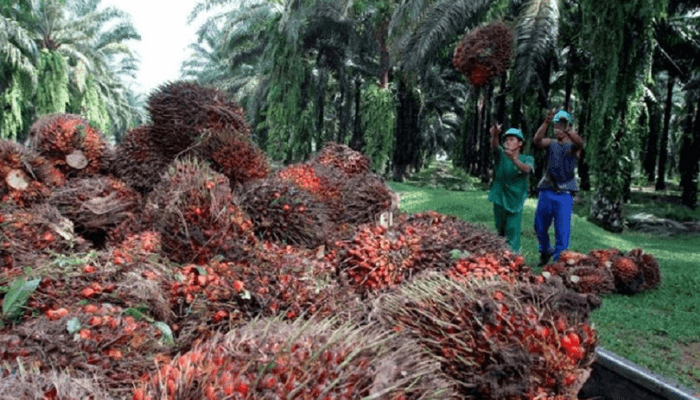
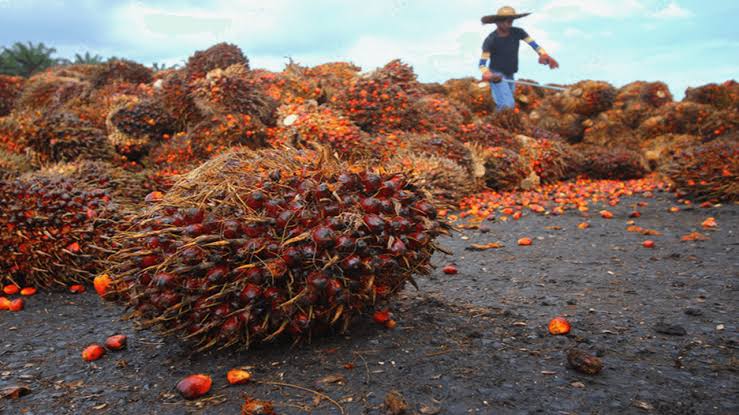
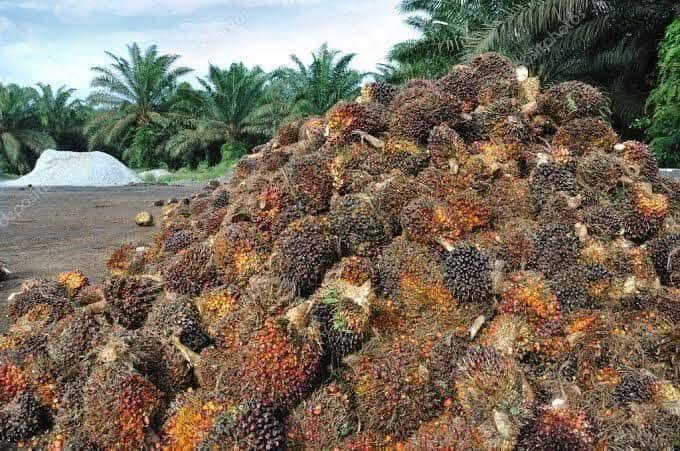
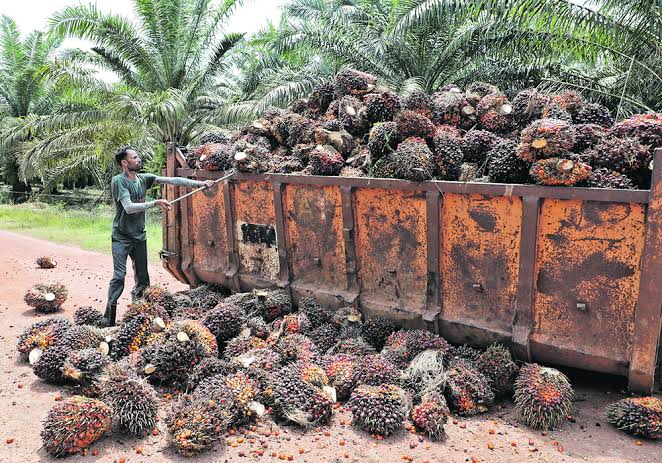
Fresh Fruit Bunches, commonly called FFB, are the harvested bunches of fruits produced by oil palm trees.
According to the Nigerian Institute for Oil Palm Research (NIFOR), yield can start at around 3 tonnes of FFB per hectare and increase as the palms mature, reaching roughly 18 tonnes per hectare by about year 12, with higher yields possible under suitable conditions. NIFOR also reports that improved planting materials can achieve substantially higher yields. (NIFOR)
For improved Tenera planting materials, Nigerian research has reported yields in the region of 15–18 tonnes of FFB per hectare per year, with well-managed plantations and superior materials capable of reaching 15–25 tonnes or more per hectare under suitable conditions. (FUTO Repository)
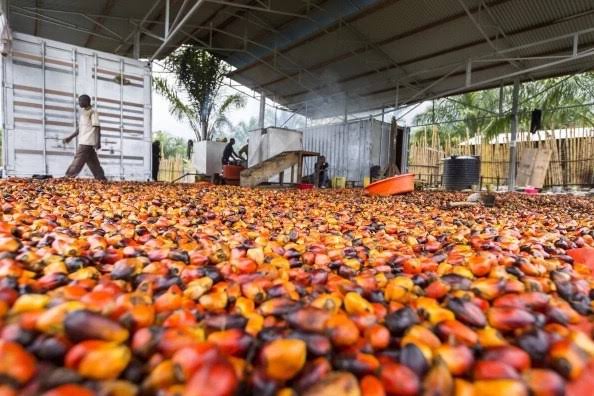
This means a useful way for a young farmer to think about production is:
- Poorly managed or unimproved palms: production may be relatively low.
- Young productive plantation: yield gradually increases as the palms develop.
- Well-managed improved plantation: around 15–25 tonnes of FFB/ha/year can be achievable under favourable conditions.
- Exceptional plantations: may perform above this range.
These figures are not guarantees. They are examples of what different production systems and improved materials can achieve.
Why FFB Yield Is More Important Than Looking at Palm Oil Alone
When farmers discuss oil palm production, they sometimes jump directly to the number of litres of oil they expect to sell.
That can be misleading.
The first production figure to establish is the amount of FFB harvested from the hectare.
For example, suppose a mature hectare produces:
20 tonnes of FFB per year.
The next question is how efficiently those bunches are processed.
Two farmers can harvest approximately the same quantity of FFB but obtain different amounts of palm oil because of differences in:
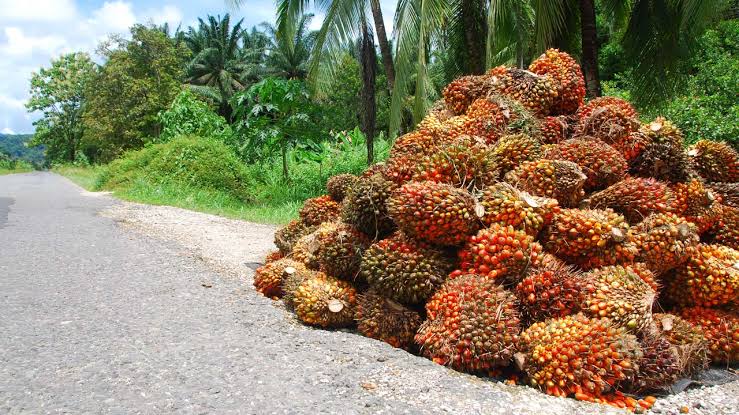
- Fruit maturity
- Time between harvesting and processing
- Processing equipment
- Sterilization or cooking
- Digestion
- Pressing efficiency
- Clarification
- Fruit losses
- Processing technique
This is why FFB production and oil extraction should be considered separately.
How Much Palm Oil Can 1 Hectare Produce?
The amount of palm oil extracted from FFB is normally expressed using an oil extraction rate (OER).
OER represents the percentage of the FFB that is recovered as crude palm oil.
FAO-related data indicate that palm-oil extraction from a bunch can vary roughly from 17% to 27%, depending on the material and processing conditions. NIFOR’s small-scale processing equipment, for example, lists an extraction ratio of about 15%. (Our World in Data)
Therefore, it is better for a farmer to work with a range rather than assume one fixed extraction percentage.
Example 1: 10 tonnes of FFB
If one hectare produces 10 tonnes of FFB and the mill obtains a 15% oil extraction rate:
10 tonnes × 15% = 1.5 tonnes of palm oil
At a 20% extraction rate:
10 tonnes × 20% = 2 tonnes of palm oil
At a 25% extraction rate:
10 tonnes × 25% = 2.5 tonnes of palm oil
So 10 tonnes of FFB could produce roughly 1.5–2.5 tonnes of crude palm oil, depending on the extraction efficiency.
Example 2: 15 tonnes of FFB
At 15% extraction:
15 × 0.15 = 2.25 tonnes
At 20% extraction:
15 × 0.20 = 3 tonnes
At 25% extraction:
15 × 0.25 = 3.75 tonnes
Therefore, 15 tonnes of FFB could potentially produce around 2.25–3.75 tonnes of crude palm oil.
Example 3: 20 tonnes of FFB
For a mature plantation producing 20 tonnes of FFB:
At 15% extraction: 3 tonnes of oil
At 20% extraction: 4 tonnes of oil
At 25% extraction: 5 tonnes of oil
This illustrates why a hectare producing 20 tonnes of FFB does not automatically mean that the farmer will get exactly 4 tonnes of palm oil.
The actual quantity depends heavily on the processing operation.
A Simple Production Guide for a Young Farmer
| Annual FFB from 1 hectare | At 15% extraction | At 20% extraction | At 25% extraction |
|---|---|---|---|
| 10 tonnes | 1.5 tonnes oil | 2 tonnes oil | 2.5 tonnes oil |
| 15 tonnes | 2.25 tonnes | 3 tonnes | 3.75 tonnes |
| 20 tonnes | 3 tonnes | 4 tonnes | 5 tonnes |
| 25 tonnes | 3.75 tonnes | 5 tonnes | 6.25 tonnes |
These are illustrative calculations, not guaranteed farm yields.
When Does a One-Hectare Plantation Reach Good Production?
Oil palm does not produce its maximum crop immediately after planting.
NIFOR states that palms mature at around three years after planting, while its reported yield pattern shows production increasing as the plantation ages. (NIFOR)
A young plantation may therefore produce only a small quantity of FFB during its early productive years.
As the palms develop a larger canopy and become more established, the number and size of fruit bunches can increase.
This is why farmers should avoid calculating the lifetime profitability of a plantation using the yield of a young plantation.
The Variety You Plant Matters
One of the biggest decisions a young oil palm farmer makes is the choice of planting material.
Improved Tenera planting materials can significantly outperform unimproved palms.
Nigerian research has reported improved NIFOR Tenera materials producing approximately 15–18 tonnes FFB/ha/year, with performance of 15–25 tonnes/ha/year reported in farmers’ fields for improved hybrid materials. (FUTO Repository)
By comparison, unimproved palms can produce much less.
This is one reason farmers should obtain planting materials from reliable sources rather than collecting random seeds or planting unknown seedlings.
A plantation established with poor planting material can remain a low-yielding plantation for many years.
Fertilizer and Soil Management Also Affect Yield
A good variety alone does not guarantee a high harvest.
Oil palm needs proper nutrition to maintain vegetative growth and produce bunches.
Important nutrients include:
- Nitrogen
- Potassium
- Magnesium
- Phosphorus and other nutrients where deficient
However, farmers should not blindly apply the same fertilizer quantity to every plantation.
Soil type, palm age, nutrient status, rainfall and previous management all influence fertilizer requirements.
Where possible, soil and leaf analysis can help guide fertilizer decisions.
Weed Control Matters
Heavy weed competition can reduce the resources available to the palms.
Young palms are particularly vulnerable because their root system and canopy are still developing.
Good plantation management should therefore include appropriate weed control around the palms and along plantation rows.
The goal is not simply to make the farm look clean. The goal is to reduce competition and help the palms establish and produce efficiently.
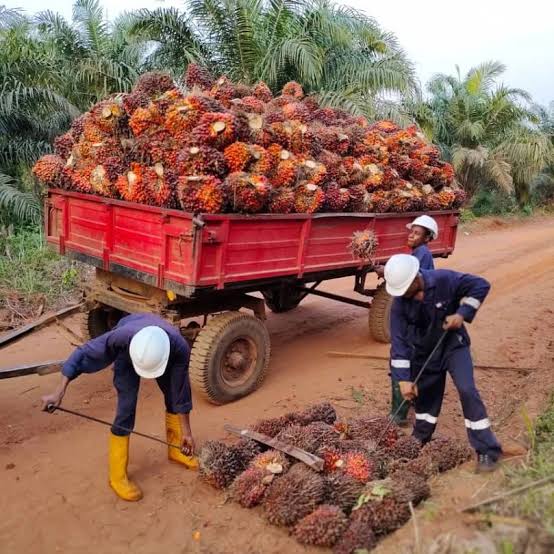
Harvesting at the Right Time Is Important
A farmer can grow good palms and still lose value through poor harvesting.
Bunches need to be harvested at the appropriate maturity stage.
Very immature bunches can have lower oil recovery, while leaving ripe bunches too long can also create losses and quality problems.
FAO material notes that fruit maturity affects oil extraction and quality, with ripe bunches generally providing better extraction conditions than unripe bunches. (UNIDO)
Harvesting should therefore be regular rather than waiting until a large quantity of bunches has accumulated.
Processing Can Make a Big Difference
Suppose your hectare produces 20 tonnes of FFB.
If your processing operation recovers 15% oil:
20 × 15% = 3 tonnes
But if a better-performing mill achieves 20%:
20 × 20% = 4 tonnes
That is a difference of 1 tonne of crude palm oil from the same quantity of FFB.
This shows why farmers should pay attention not only to plantation management but also to where and how their FFB is processed.
Good processing can help reduce oil losses and improve recovery.
Do Not Confuse Palm Oil With Palm Kernel Oil
An oil palm fruit produces more than one valuable product.
The fleshy part of the fruit produces crude palm oil (CPO), while the kernel inside the nut can be processed to produce palm kernel oil.
Therefore, when calculating palm-oil production, be clear about which product you are discussing.
The figures above refer mainly to crude palm oil from the fruit’s mesocarp, not palm kernel oil.
What Can a Farmer Realistically Expect From 1 Hectare?
For a young farmer planning a plantation, it is better to think in stages rather than expect one fixed number.
A well-established plantation using improved planting material might target something in the broad range of 15–25 tonnes of FFB per hectare per year under suitable Nigerian conditions.
At an illustrative 20% extraction rate:
- 15 tonnes FFB → about 3 tonnes CPO
- 20 tonnes FFB → about 4 tonnes CPO
- 25 tonnes FFB → about 5 tonnes CPO
But actual results can be considerably lower or higher depending on the plantation and processing system. Nigerian sources document both much lower yields from unimproved systems and substantially higher performance from improved materials. (Central Bank of Nigeria)
Do Not Calculate Your Income From Yield Alone
This is very important for a new farmer.
Producing 20 tonnes of FFB does not automatically mean that the farmer will make a particular amount of money.
Income depends on factors such as:
- FFB selling price
- Whether the farmer sells FFB or processes it
- Oil extraction efficiency
- Palm oil selling price
- Labour costs
- Fertilizer costs
- Weed control costs
- Harvesting costs
- Transport
- Processing charges
- Pest and disease losses
- Farm age and productivity
Palm oil prices also change over time.
Therefore, a farmer should calculate income using the actual local FFB or palm-oil price at the time of sale, rather than using a fixed figure from an old article.
The Main Lesson for a Young Palm Farmer
If you own one hectare of oil palm, do not ask only:
“How many litres of palm oil will I get?”
Ask these questions instead:
What variety did I plant?
How many tonnes of FFB can my hectare produce?
How old are my palms?
Is my soil suitable and adequately fertile?
Am I managing weeds, pests and diseases properly?
Am I harvesting at the right maturity?
How efficient is the processing mill?
These questions give you a much more realistic picture of your plantation’s potential.
Final Takeaway
A one-hectare oil palm plantation in Nigeria can produce very different quantities depending on the quality of the planting material and the level of management.
Improved Nigerian oil palm materials can produce around 15–25 tonnes of FFB per hectare per year under favourable and well-managed conditions. (Central Bank of Nigeria)
If those FFB are processed at an illustrative extraction rate of 15–25%, 15–25 tonnes of FFB could correspond to roughly 2.25–6.25 tonnes of crude palm oil.
However, these numbers should be treated as production scenarios, not promises.
For a young farmer, the real goal should be to establish a healthy plantation with genuine high-quality planting materials, maintain good soil and nutrient management, harvest correctly and use efficient processing. Over time, these decisions have a major influence on how much oil one hectare can actually produce.
Leave a Reply