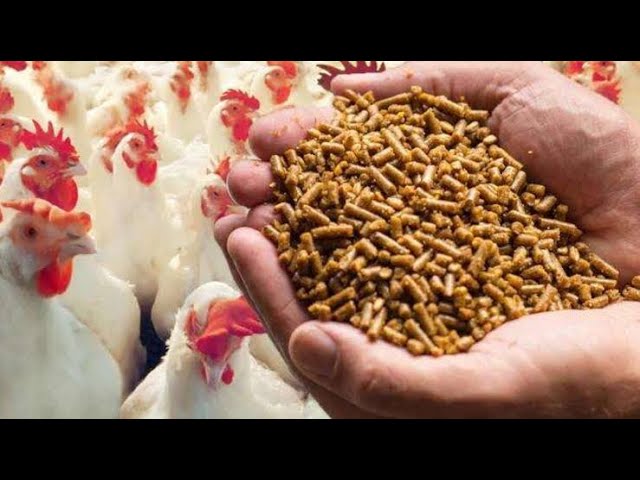
How to Make Chicken Feed from Starter to Finisher in Nigeria
Yes. For chicken farmers in Nigeria, you can make your own feed from starter to finisher instead of depending entirely on commercial feed. The key is getting the protein, energy, minerals, vitamins and amino acids balanced correctly.
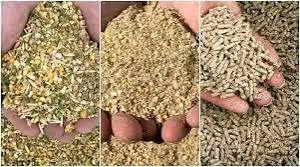
Below is a practical guide using ingredients commonly available in Nigeria.
1. Understand the three stages
| Stage | Approx. age | Main purpose | Typical crude protein |
|---|---|---|---|
| Starter | 0–4 weeks | Rapid growth, bone and organ development | 21–23% |
| Grower | 5–8 weeks | Body and muscle development | 19–21% |
| Finisher | 9 weeks to market | Weight gain and efficient finishing | 17–19% |
Exact requirements vary by breed and production system, so these are practical targets rather than a single universal formula.
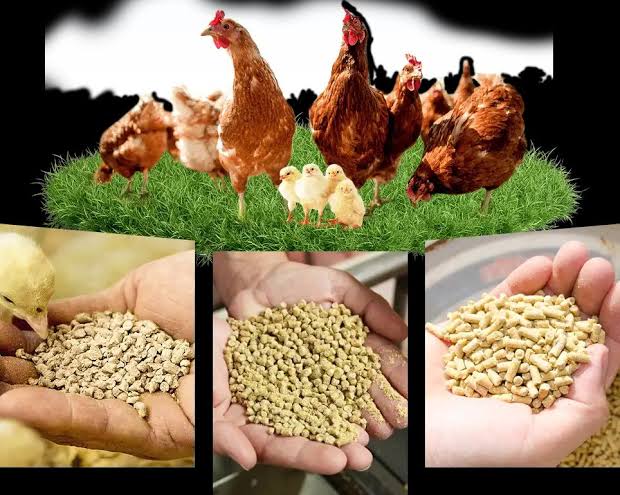
2. Main ingredients you can use
Energy sources
These provide calories for growth.
- Maize
- Sorghum
- Wheat
- Millet
- Rice bran
- Cassava products, when properly processed
- Wheat offal
Maize is particularly useful because it supplies energy and is widely available in Nigeria.
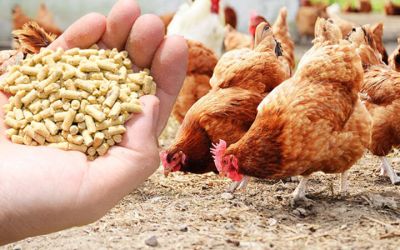
Protein sources
Protein is extremely important, particularly during the starter period.
- Soybean meal
- Full-fat soybean
- Groundnut cake
- Fish meal
- Blood meal
- Maggot meal/insect meal where properly produced
- Some other approved plant protein sources
Soybean meal is one of the most useful protein ingredients for broiler feed.
Mineral sources
- Limestone
- Bone meal or dicalcium phosphate
- Salt
- Vitamin-mineral premix
Other ingredients
- Methionine
- Lysine
- Choline chloride
- Mycotoxin binder where appropriate
- Enzyme products where appropriate
Important: Don’t simply mix maize + soybean + salt and assume the feed is complete. Poultry require specific amino acids, minerals and vitamins that may be missing from a basic mixture.
3. Example starter feed formula — 100 kg
A practical example for a broiler starter could look approximately like this:
| Ingredient | Quantity |
|---|---|
| Maize | 50 kg |
| Soybean meal | 30 kg |
| Wheat offal | 8 kg |
| Groundnut cake | 5 kg |
| Fish meal | 3 kg |
| Vegetable oil | 1 kg |
| Dicalcium phosphate | 1.5 kg |
| Limestone | 0.8 kg |
| Salt | 0.3 kg |
| Vitamin-mineral premix | 0.25 kg |
| DL-Methionine | 0.25 kg |
| Lysine | 0.20 kg |
| Choline chloride | 0.20 kg |
| Total | 100.5 kg |
The exact quantities should be adjusted with a feed formulation program or nutritionist because the nutrient composition of maize, soybean meal, fish meal and other ingredients varies considerably.
For a small farmer, it’s better to formulate around the actual nutrient analysis of the ingredients available rather than blindly following a recipe.
4. Grower feed — 100 kg
Once the chickens have passed the starter stage, you can reduce the protein level somewhat while maintaining sufficient energy.
A typical starting formulation could be:
| Ingredient | Quantity |
|---|---|
| Maize | 55 kg |
| Soybean meal | 24 kg |
| Wheat offal | 10 kg |
| Groundnut cake | 6 kg |
| Fish meal | 2 kg |
| Vegetable oil | 1 kg |
| Dicalcium phosphate | 1 kg |
| Limestone | 0.7 kg |
| Salt | 0.3 kg |
| Vitamin-mineral premix | 0.25 kg |
| Methionine | 0.20 kg |
| Lysine | 0.20 kg |
| Choline chloride | 0.20 kg |
| Total | 100.85 kg |
Again, this should be balanced based on the actual nutrient values of your ingredients.
5. Finisher feed — 100 kg
During finishing, the objective is to produce good body weight efficiently without unnecessarily wasting expensive protein.
A typical formulation might contain:
- More maize/energy ingredients
- Moderate soybean meal
- Wheat offal
- Groundnut cake
- Appropriate minerals
- Premix
- Essential amino acids
For example:
| Ingredient | Quantity |
|---|---|
| Maize | 58 kg |
| Soybean meal | 20 kg |
| Wheat offal | 12 kg |
| Groundnut cake | 6 kg |
| Fish meal | 1 kg |
| Vegetable oil | 1 kg |
| Dicalcium phosphate | 0.9 kg |
| Limestone | 0.7 kg |
| Salt | 0.3 kg |
| Vitamin-mineral premix | 0.25 kg |
| Methionine | 0.20 kg |
| Lysine | 0.20 kg |
| Choline chloride | 0.20 kg |
| Total | 100.75 kg |
This should also be professionally checked before commercial-scale production.
6. How to actually make the feed
Step 1 — Buy good-quality ingredients
Don’t buy maize simply because it is cheap.
Check for:
- Mould
- Bad smell
- Excessive moisture
- Insect infestation
- Discolouration
- Rotten grains
- Contamination
Mouldy maize can contain mycotoxins, which can seriously affect poultry performance.
Step 2 — Dry the ingredients properly
Ingredients should be sufficiently dry before storage and milling.
Nigeria’s warm and humid conditions can make poor storage particularly dangerous.
Store ingredients:
- Off the floor
- Away from walls where possible
- In a dry, ventilated area
- Protected from rodents
- Protected from rain
- Away from chemicals and pesticides
Step 3 — Mill the grains
Maize and other grains should be ground into an appropriate particle size.
Don’t make the feed excessively fine because very dusty feed can reduce consumption and create respiratory problems.
Don’t make it excessively coarse either, especially for young chicks.
Step 4 — Weigh everything
This is one of the most important steps.
Don’t use estimates such as:
“One bucket of maize and half bucket of soybean.”
Use a weighing scale.
If the formula calls for 30 kg soybean meal, measure 30 kg, not “approximately one bag.”
Small errors become significant when you produce hundreds of kilograms.
7. Mixing order matters
Don’t throw everything into the mixer randomly.
First mix the major ingredients:
Maize + soybean meal + wheat offal + groundnut cake
Then separately mix the small ingredients.
For example, premix the:
- Salt
- Methionine
- Lysine
- Premix
- Mineral ingredients
with a small quantity of maize or wheat offal.
Then add that mixture to the main feed.
This helps prevent uneven distribution of micronutrients.
8. Never forget the premix
A common mistake among small-scale farmers is focusing only on maize and protein.
Chickens also require:
- Vitamin A
- Vitamin D
- Vitamin E
- Vitamin K
- B vitamins
- Calcium
- Phosphorus
- Sodium
- Trace minerals
That’s why a good poultry vitamin-mineral premix is important.
Follow the manufacturer’s inclusion rate because different premixes have different concentrations.
9. Be careful with soybean
Soybean is an excellent protein source, but raw soybean should not simply be fed to chickens in large quantities.
Raw soy contains anti-nutritional factors such as trypsin inhibitors.
If using full-fat soybean, it needs appropriate heat treatment/toasting before use.
Commercial soybean meal has already undergone processing, so it is easier to use.
10. Be careful with cassava
Cassava can be used as an energy ingredient, but it needs proper processing.
Fresh cassava should not simply be harvested, chopped and thrown into chicken feed.
Proper processing helps reduce harmful compounds and improve its suitability as a feed ingredient.
Also, cassava is primarily an energy source, so you still need adequate protein and amino acids in the complete ration.
11. Groundnut cake needs special attention
Groundnut cake is useful and commonly available in Nigeria, but inspect it carefully.
The major concern is aflatoxin contamination, especially when the groundnuts were poorly dried or stored.
Never use visibly mouldy groundnut cake simply because it is cheap.
Aflatoxin contamination can cause:
- Poor growth
- Reduced feed efficiency
- Liver problems
- Increased mortality
- Poor immune response
A mycotoxin binder may help in some situations, but it is not a substitute for buying clean, properly stored ingredients.
12. Don’t formulate only by crude protein
This is very important.
Two feeds can both contain 20% crude protein but produce different results.
Why?
Because chickens need specific amino acids, especially:
- Lysine
- Methionine
- Threonine
- Tryptophan
Modern poultry formulation therefore considers amino-acid balance, energy, calcium, available phosphorus and other nutrients—not just crude protein.
For serious commercial production, formulate based on metabolizable energy and digestible/available nutrients, not protein percentage alone.
13. How much feed will a broiler consume?
Consumption varies according to:
- Breed
- Temperature
- Feed quality
- Health
- Housing
- Water availability
- Management
As a rough illustration, a broiler may consume several kilograms of feed from chick stage until market age.
Don’t force a fixed amount on every farm.
Instead, monitor:
Feed intake + body weight + mortality + feed conversion.
If birds are eating plenty but not gaining weight, investigate the feed quality, disease, water, temperature and management.
14. Water is just as important as feed
A farmer can prepare excellent feed and still get poor results if the birds don’t have good water.
Provide clean, fresh drinking water continuously.
Water containers should be cleaned regularly.
During hot Nigerian weather, water requirements can increase substantially.
15. How to know whether your homemade feed is working
Don’t judge your feed only by looking at the birds.
Keep records.
Record:
- Number of chicks
- Daily/weekly feed used
- Weekly body weight
- Mortality
- Medication/vaccination
- Market weight
- Total feed consumed
- Total cost of feed
Then calculate:
Feed Conversion Ratio (FCR) = Feed consumed ÷ Live-weight gain
For example:
If your flock consumes 500 kg of feed and gains 250 kg of live weight:
FCR = 500 ÷ 250 = 2.0
A lower FCR generally means better feed efficiency, although the appropriate target depends on breed, age, environment and management.
16. One major recommendation for Nigerian farmers
If you’re producing only 50–100 birds, making your own feed may not always be cheaper after accounting for:
- Ingredients
- Transportation
- Milling
- Labour
- Premix
- Amino acids
- Storage
- Wastage
- Quality-control costs
But once you are producing at a larger scale, self-formulation can become more attractive if you have reliable ingredient suppliers and proper formulation.
The biggest advantage isn’t simply “homemade feed is cheaper.”
The advantage is that you can control your ingredients and potentially reduce feed cost while maintaining good performance.
The safest approach
For a Nigerian chicken farmer starting out:
Starter: use a professionally formulated starter ration or have a nutritionist formulate one.
Grower: gradually transition to your own formulated ration.
Finisher: formulate according to your target market weight and actual ingredient prices.
And before producing large quantities, have your feed or ingredients laboratory-tested where possible, particularly when using ingredients with a risk of mycotoxin contamination.
Leave a Reply