How Long Does Oil Palm Take to Start Producing Fruits in Nigeria?
If you are planning to start an oil palm plantation in Nigeria, one of the first questions you should ask is: “How many years will I wait before my palms start producing fruits?”
Oil palm is not a crop that gives immediate returns. Unlike crops such as maize, vegetables or cassava, you may spend several years preparing the land, raising seedlings and caring for young palms before the plantation begins to generate meaningful income.
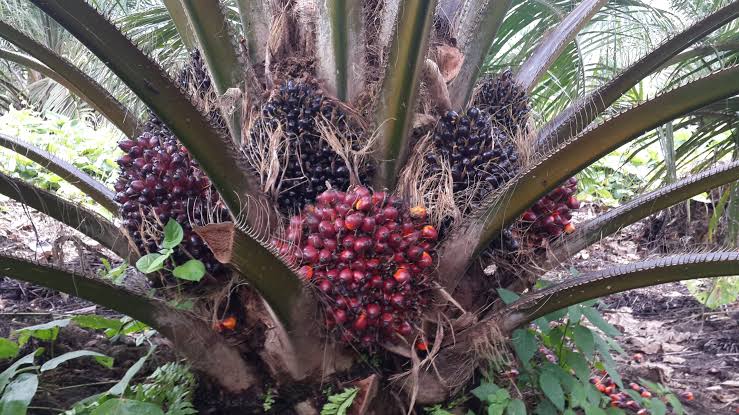
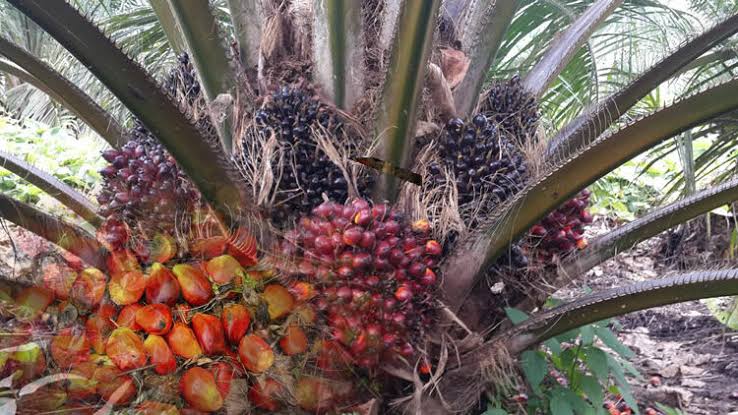
Under good management, improved oil palm can begin producing fruit around 3–4 years after field planting. However, early fruit production should not be confused with full commercial production. A plantation may produce some bunches before it reaches the stage where harvesting provides substantial and regular income. FAO sources indicate that new palms can begin bearing around 3–4 years, while commercial production can take longer depending on management and conditions. (FAOHome)
For a young Nigerian farmer, it is important to understand the journey from nursery → field planting → first fruits → commercial harvesting.
1. The Nursery Stage: About 10–15 Months
Your oil palm plantation journey begins before the seedlings enter the field.
Quality oil palm seedlings are normally raised in a nursery where they receive regular watering, weed control, fertilizer and protection from pests and diseases.
Depending on the nursery system, seedlings may spend roughly 10–15 months in nursery development before field planting. IITA training material describes a one-stage nursery where seedlings can be ready for field planting after about 11 months, while a two-stage system involves approximately 3–4 months in a pre-nursery followed by about 8 months in the main nursery. (IITA Bibliography)
This means a farmer should not think:
“I planted the seed today, so I will harvest in three years.”
The timeline depends on what you mean by planting.
If you are buying a properly raised field-ready seedling, the waiting period starts from the time you establish the palm in the plantation. If you are starting from germinated seeds, you must first account for the nursery period.
Why the nursery stage is important
Do not underestimate the nursery.
A poorly managed seedling may enter the field weak and struggle to establish properly. FAO emphasizes that healthy nursery management is important because a poorly developed seedling can become a poor-performing palm in the plantation. (FAOHome)
During the nursery period, pay attention to:
- Regular watering
- Weed control
- Proper nutrition
- Pest and disease monitoring
- Selection and removal of abnormal seedlings
- Adequate sunlight and spacing
- Good-quality planting material
A young farmer should therefore see the nursery as the foundation of the future plantation.
2. Field Establishment: Around the First Year After Nursery
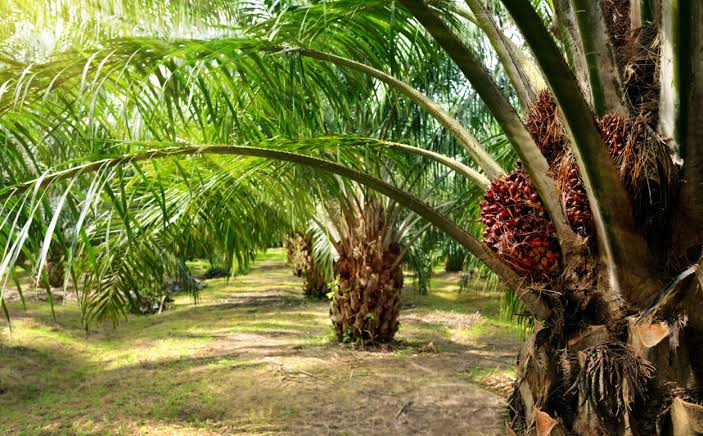
Once the seedlings are strong enough, they can be transferred to the plantation.
Oil palm seedlings are commonly moved to the field at roughly 10–18 months of age, depending on the production system and seedling development. (EcoCrop)
In parts of Nigeria, planting at the beginning of the rainy season is particularly useful because the young palms have access to moisture while establishing their roots. Research from Cross River State, Nigeria, has also examined transplanting at about 10–12 months, with April–May suggested in that study for the Calaro area. (FAO AGRIS)
Before planting, prepare the land properly
Field establishment involves much more than simply digging holes.
The farmer should consider:
- Land clearing
- Removal of problematic stumps and vegetation
- Proper field layout
- Correct planting spacing
- Planting-hole preparation
- Cover crops where appropriate
- Drainage where necessary
- Access roads and paths
- Protection of young palms
- Weed management
Correct spacing is important because palms need enough room for their roots, leaves and canopy to develop. Poor spacing can eventually affect plantation productivity and harvesting operations. (FAOHome)
3. The First 1–2 Years in the Field: Growth Before Serious Production
After planting, do not expect the palm to immediately produce large quantities of fruit.
The young palm is concentrating heavily on establishing its:
- Root system
- Trunk
- Leaves
- Canopy
- Overall plant structure
This is a very important period for the farmer.
Your job is to help the young palms grow strongly so that they can enter production as early and as productively as their genetics and environment allow.
Important management activities include:
Weed control:
Weeds can compete with young palms for water, nutrients and sunlight. Keeping the area around young palms properly managed is therefore essential. (FAOHome)
Fertilizer management:
Young palms need adequate nutrients for vegetative growth. However, fertilizer should not be applied using a blind “one dose fits all” approach. Soil conditions, palm age, planting material and local recommendations should be considered.
Pest and disease monitoring:
Regularly inspect the plantation so that problems can be detected early.
Replacing dead palms:
If some seedlings die after establishment, replace them early where appropriate so that you do not end up with unnecessary gaps in the plantation.
Good field maintenance:
Do not abandon the plantation simply because the palms are not yet producing money.
The years before production are actually when you are building the productive capacity of the plantation.
4. When Does Oil Palm Start Producing Fruits?
Under good conditions, improved oil palm can begin producing around 3–4 years after field planting. (FAOHome)
This does not necessarily mean that you will immediately have a large commercial harvest.
The first bunches may be relatively limited, and production normally increases as the palms become more established.
This is why young farmers should distinguish between:
First fruit production
and
commercially meaningful production.
They are not always the same thing.
A farmer may see the first fruit bunches appearing and become excited that the plantation has “started producing.” That is true biologically, but the quantity may still be too low to represent the level of income the farmer expects.
5. When Does Commercial Harvesting Begin?
Commercial harvesting depends on several factors, including:
- The quality and genetics of the planting material
- Soil fertility
- Rainfall
- Field management
- Weed control
- Fertilizer management
- Pest and disease pressure
- Palm age
- Plantation density
- General farm management
Some references indicate that although oil palm plantations can start bearing around three years, the first substantial commercial crop may take around five to six years. (FAOHome)
Therefore, a sensible financial plan should not assume that your first few bunches will immediately provide the full income you want.
Think of the plantation as moving through stages:
Nursery → Field establishment → First fruits → Increasing production → Commercial production → Full production
6. A Simple Timeline for a Young Nigerian Palm Farmer
Here is a simple way to understand the journey:
Months 0–12/15 — Nursery
The seedlings are raised and carefully managed.
Around 10–18 months — Field planting
Healthy seedlings are transferred from the nursery to the plantation. (EcoCrop)
Years 1–2 after field planting — Establishment
The palms concentrate on vegetative growth and root development. The farmer must focus heavily on weed control, nutrition, pest monitoring and general plantation maintenance.
Around Years 3–4 — First production
The palms can begin producing fruit bunches under suitable conditions. (FAOHome)
Around Years 4–6 and beyond — Increasing commercial production
Production can become more meaningful as the palms mature, although the exact timing varies.
Around Years 8–10 — Full production
FAO crop information indicates that oil palm can reach full production around 8–10 years under suitable conditions. (EcoCrop)
This shows why oil palm should be viewed as a long-term plantation investment, not a quick-money crop.
7. Why Some Farmers Harvest Earlier Than Others
Two farmers can plant oil palm at approximately the same time and still get very different results.
One plantation may start producing earlier and more strongly than another.
Why?
Quality planting material
Starting with good planting material is extremely important. Improved planting material can make a major difference compared with unsuitable or poor-quality seedlings.
Soil condition
Oil palm needs suitable soil and adequate nutrients. A plantation growing on poor soil without proper nutrient management may perform below expectations.
Rainfall and water availability
Oil palm requires adequate moisture. Severe water stress can affect growth and production.
Weed management
A young palm fighting heavy weed competition may not develop as quickly as a well-maintained palm.
Fertilizer management
Nutrients are essential, but fertilizer should be managed according to the needs of the palms and the characteristics of the soil.
Pest and disease control
Serious pest or disease problems can weaken palms and reduce their productive potential.
Planting density and field layout
Incorrect spacing can create problems as the palms mature.
8. Do Not Make This Common Mistake
One of the biggest mistakes a new farmer can make is budgeting as if the plantation will start providing substantial income immediately after planting.
For example, imagine you establish a plantation in 2026.
You should not automatically plan your finances around receiving a large income in 2029.
You may see the first fruits around that period under good conditions, but meaningful commercial production can take longer.
A better approach is to prepare financially for several years of plantation maintenance before depending on the oil palm for major income.
9. Use the Early Years Wisely
The period before the palms produce substantial fruit does not have to be completely unproductive.
Where local conditions, spacing and plantation management allow it, farmers may consider suitable intercropping systems during the early establishment years.
However, farmers should be careful not to plant crops that compete excessively with young oil palms or interfere with plantation management.
The priority should always remain the healthy establishment of the oil palms.
10. When Should You Start Preparing for Harvesting?
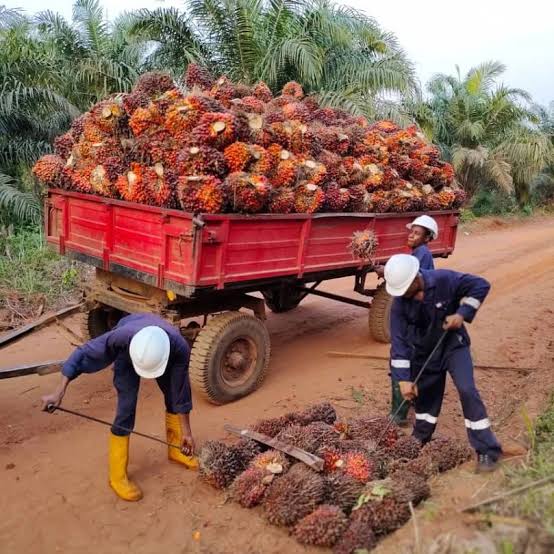
Do not wait until the first bunches appear before thinking about harvesting.
As your palms approach production, begin preparing for:
- Harvesting tools
- Farm paths
- Collection points
- Labour
- Transportation
- Fruit collection
- Access to buyers or processors
- Harvesting schedules
- Record keeping
Harvesting at the correct maturity stage is important because leaving bunches too long can result in over-ripening and fruit losses. (FAOHome)
A farmer who prepares early will have an easier time when production increases.
11. The Most Important Lesson for a Young Farmer
Oil palm requires patience.
You may spend money on land preparation, seedlings, fertilizer, labour, weed control and maintenance for several years before the plantation generates significant returns.
That does not mean the plantation is failing.
The young plantation is an investment that is still growing.
If you start with good planting material, establish the palms properly and maintain them consistently, you are building a productive asset that can continue producing for many years.
Final Takeaway
For a young Nigerian farmer, remember these approximate stages:
Nursery: about 10–15 months, depending on the nursery system.
Field planting: generally when healthy seedlings are sufficiently developed, often around 10–18 months old.
First fruits: commonly around 3–4 years after field planting under good conditions.
Commercial production: may take several more years to become substantial; around 5–6 years is a useful planning range cited in FAO material.
Full production: can occur around 8–10 years under suitable conditions.
The exact timing is not guaranteed. Variety, soil, rainfall, planting material and farm management all influence how quickly your palms develop.
So, if you are starting an oil palm plantation in Nigeria, do not plant only because someone told you that oil palm will give money in three years. Plant with a long-term plan.
Your first goal should be to establish healthy, vigorous palms. The fruits and income will come as the plantation matures.
A well-managed plantation can become a valuable long-term agricultural investment—but success begins with good seedlings, proper field establishment and consistent care from the first day.
Leave a Reply