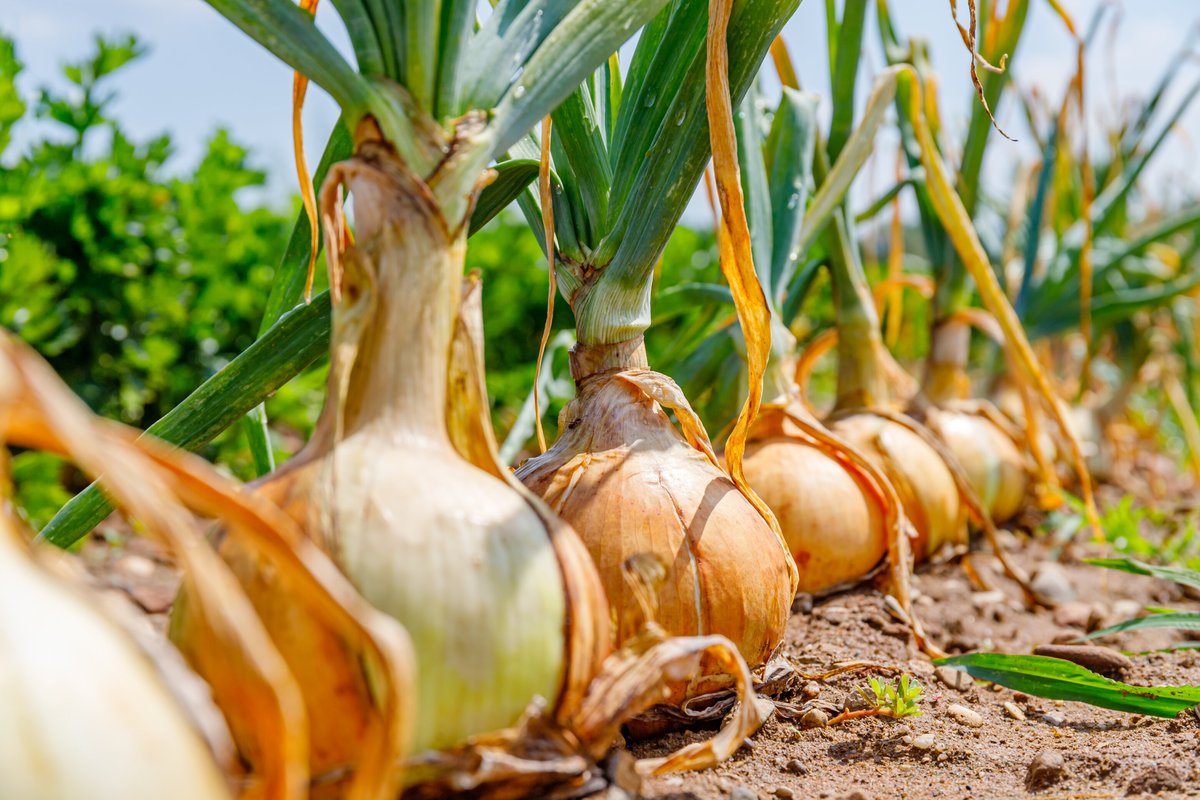
Onion Farming Basics: A Beginner’s Guide for Young Onion Farmers in Nigeria
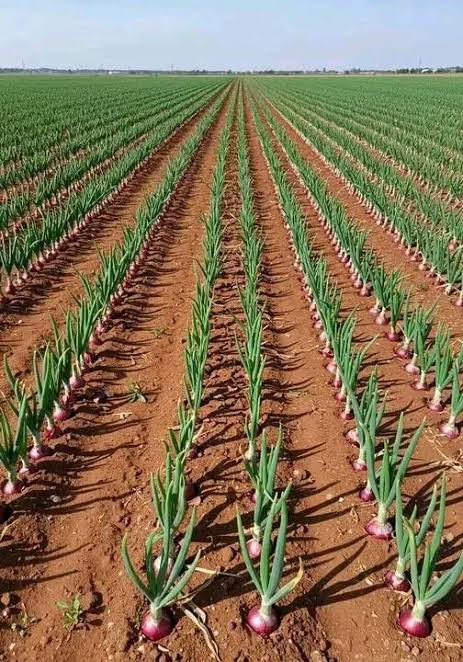
Onion farming can be a profitable agricultural business in Nigeria when you choose the right variety, prepare the soil properly, manage water carefully and control pests and diseases. However, good onion production requires planning because onions are sensitive to poor drainage, irregular watering and unsuitable planting conditions.
This guide explains the basics every young onion farmer should understand before starting.
What Is Onion Farming?
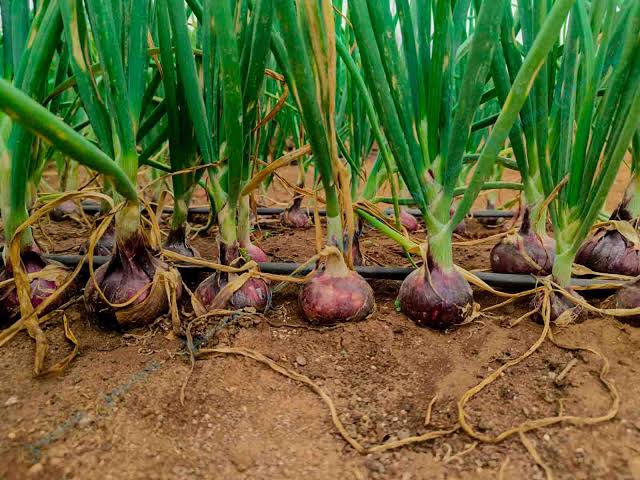
Onion farming is the cultivation of onions for food, commercial sales, processing and other uses. Onions are grown mainly for their bulbs, although the green leaves can also be harvested and sold.
In Nigeria, onions are commonly produced in northern areas where the dry-season climate is suitable for bulb formation. Farmers can also grow onions in other regions when they have suitable soil, temperature and reliable irrigation.
Types of Onions Grown in Nigeria
Different onion types and varieties are grown depending on the location, market demand and production conditions.
Common categories include:
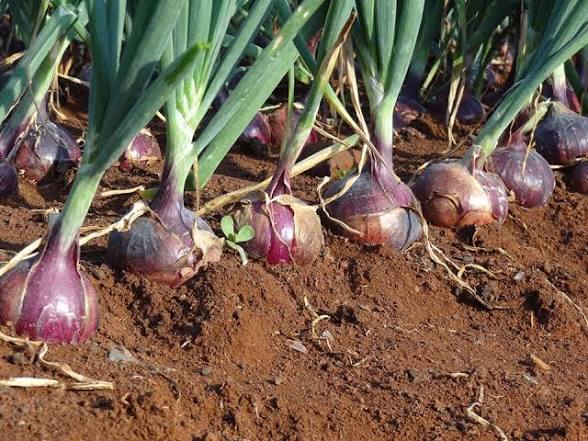
- Red onions – widely consumed and popular in Nigerian markets.
- White onions – have a lighter appearance and are used in cooking and food processing.
- Yellow onions – commonly used for cooking and can have good storage qualities.
- Short-day onion varieties – generally suitable for areas with shorter day lengths and are important for many Nigerian production areas.
- Local and improved varieties – farmers may use locally adapted onions or improved varieties supplied by reputable seed companies.
Young farmers should avoid choosing seed simply because another farmer obtained a good harvest from it. A variety should be selected based on its suitability to your location, planting season, disease resistance, maturity period, bulb quality and market demand.
Best Onion Varieties for Farmers in Nigeria
The best variety depends on your farming location and production season. Farmers should look for varieties that are:
- Adapted to the local climate.
- Suitable for the available day length.
- Capable of producing good-sized bulbs.
- Relatively resistant or tolerant to important diseases.
- Suitable for the target market.
- Able to mature within the farmer’s planned production period.
- Suitable for storage if the onions will not be sold immediately.
Before buying large quantities of seed, test a variety on a smaller portion of land. This allows you to see how it performs under your own soil, climate, irrigation and management conditions.
Difference Between Red, White and Yellow Onions
Red onions
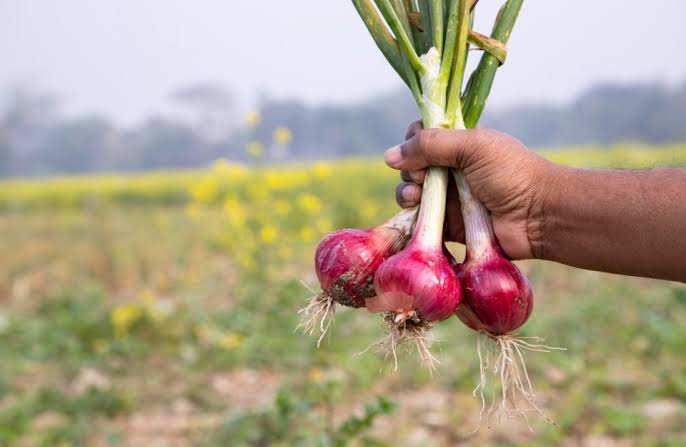
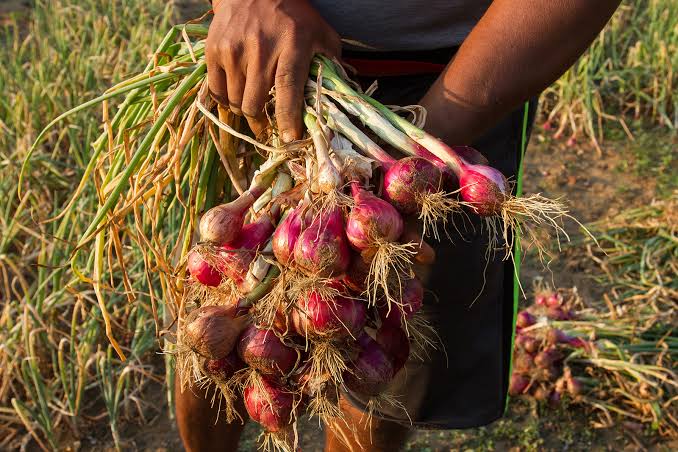
Red onions have reddish-purple outer skins and are very popular for fresh consumption. They can be attractive to consumers and are commonly used in salads, cooking and garnishing.
White onions
White onions have pale or white skins and flesh. They are used for cooking and other food purposes and may have a sharper or milder flavour depending on the variety.
Yellow onions
Yellow onions have yellow or brownish skins and are widely used for cooking. Some varieties have good storage characteristics, making them useful when farmers want to store part of their harvest.
Important: Colour alone should not determine your choice. Choose the variety that performs well in your area and has strong demand in your target market.
Best Climate for Onion Farming
Onions generally perform well under relatively cool conditions during early growth and dry, sunny conditions during bulb development and maturity.
For Nigerian farmers, the dry season can provide favourable conditions, particularly where irrigation is available.
Important climate considerations include:
- Moderate temperatures during crop development.
- Plenty of sunlight.
- Low humidity during bulb maturity.
- Reliable access to irrigation during dry periods.
- Protection from excessive rainfall during bulb maturity.
Heavy rainfall and prolonged wet conditions can increase disease problems and make bulbs difficult to dry properly after harvest.
Best Soil for Onion Cultivation
Onions perform best in fertile, loose, well-drained soil that allows the bulbs to develop easily.
Good onion soil should:
- Drain excess water quickly.
- Contain adequate organic matter.
- Have good fertility.
- Be loose enough for bulb expansion.
- Not be heavily compacted.
- Have a suitable soil pH, generally around 6.0–7.0.
Avoid poorly drained fields where water remains around the roots after irrigation or rainfall. Waterlogging can damage roots and increase the risk of diseases.
Before large-scale production, young farmers should consider conducting a soil test. It can help determine soil pH and nutrient levels and guide fertilizer and soil amendment decisions.
How Long Does Onion Take to Mature?
The maturity period depends on the variety, climate, planting method and farm management.
Many onion varieties can mature in roughly 3–5 months from seed, although the exact period varies considerably.
Farmers should follow the maturity information provided for the particular seed variety they purchase rather than relying on a fixed number of days.
One important sign of maturity is when the onion tops begin to naturally bend or fall over and the bulbs have developed their expected size and colour.
Do not harvest immature bulbs simply because you need money quickly. Proper maturity and curing can improve onion quality and storage life.
How Profitable Is Onion Farming in Nigeria?
Onion farming can be profitable, but profitability is not guaranteed.
Your profit depends on:
- Land preparation costs.
- Seed cost.
- Fertilizer and manure costs.
- Irrigation expenses.
- Labour.
- Pest and disease management.
- Harvesting and transportation.
- Storage losses.
- Yield per hectare.
- Selling price.
- Time of sale.
For example, a farmer who produces a high yield but sells when market prices are very low may make less profit than a farmer with a smaller harvest who sells during a stronger market period.
Before planting, calculate your expected production cost and identify potential buyers. Do not depend entirely on the market price you hear from another farmer because onion prices can vary significantly by location and season.
How Much Does It Cost to Start Onion Farming?
There is no single startup cost for onion farming in Nigeria because costs vary by farm size, location and production method.
Major expenses include:
- Land preparation
This may include clearing, ploughing, harrowing, ridging or bed preparation. - Seeds
Quality onion seed can be one of the important initial costs. - Nursery establishment
If using transplanting, you may need materials and labour for raising seedlings. - Fertilizer and manure
Onions require appropriate nutrients for healthy leaf and bulb development. - Irrigation
Dry-season onion farming may require a pump, water source, pipes, hoses or other irrigation equipment. - Labour
Workers may be needed for nursery management, transplanting, weeding, irrigation, fertilizer application and harvesting. - Crop protection
Budget for appropriate pest and disease management. - Harvesting and transportation
After harvesting, onions need to be handled carefully and transported to buyers or storage facilities.
Example of a Simple Budget
Instead of asking only, “How much money do I need?”, calculate your budget using:
Total startup cost = land + land preparation + seed + nursery + fertilizer/manure + irrigation + labour + crop protection + harvesting + transportation + other expenses.
A young farmer should prepare a budget before buying seed. Start with an amount you can manage and avoid putting all your available capital into seed and land preparation while leaving nothing for irrigation, crop protection or harvesting.
Important Tips for Young Onion Farmers
If you are just starting onion farming, remember these basic rules:
- Start on a manageable farm size.
- Use quality seed from a reliable source.
- Choose varieties suited to your location.
- Test your soil where possible.
- Prepare well-drained beds.
- Do not over-irrigate.
- Do not allow onions to suffer prolonged water stress.
- Weed early before weeds compete heavily with the crop.
- Monitor regularly for insects and diseases.
- Keep proper farm records.
- Know your expected production cost before planting.
- Identify potential buyers before harvest.
- Harvest at the appropriate maturity stage.
- Cure onions properly before long-term storage.
- Learn from experienced farmers in your area.
Final Advice
Onion farming can become a good source of income for young Nigerian farmers, but success starts before planting. The right variety, suitable soil, reliable water supply, proper nutrition, good pest management and a clear marketing plan are all important.
Do not rush into onion farming because you heard that another farmer made a lot of money. First understand your production costs, study the local market and start with a manageable area. As your knowledge and experience improve, you can gradually expand your onion f
Leave a Reply