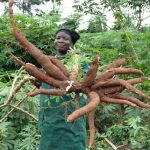
Cassava is one of Nigeria’s most important food and cash crops, providing income and food for millions of farmers. If you’re a new or existing farmer looking to start cassava farming, this guide will educate you on how to plant cassava successfully in Nigeria.

1. Understanding Cassava Farming in Nigeria
Cassava (Manihot esculenta) is a drought-tolerant crop widely grown across Nigeria. It is used for making garri, fufu, starch, animal feed, ethanol, and industrial products. States like Benue, Kogi, Enugu, Cross River, and Ondo are top producers due to their favorable climates and fertile soils.
2. Choosing the Right Cassava Variety
Selecting the right cassava variety is the first step to a successful harvest. Choose high-yielding and disease-resistant cassava varieties recommended by research institutes such as IITA or NRCRI.
Some improved varieties in Nigeria include:
- TMS 419 – High yield and resistant to diseases.
- TMS 30572 – Early maturing and suitable for most regions.
- TME 7 (aka Agric) – Good for garri and fufu processing.
3. Land Preparation
Cassava grows best on well-drained loamy soil with a pH of 5.5–7.0. Avoid waterlogged areas.
Steps for land preparation:
- Clear the land of weeds, trees, and stumps.
- Plough and harrow the soil to loosen it for easy root penetration.
- Create ridges or mounds—ridges are preferred for mechanized farming and better drainage.
4. Planting Materials (Cassava Stem Cuttings)
Cassava is propagated using stem cuttings, not seeds. Use healthy stems from 8–12 months old cassava plants.
Stem cutting tips:
- Cut stems into pieces of 20–25 cm long (about 5–7 nodes).
- Avoid using diseased or weak stems.
- Plant immediately after cutting, or store in a cool, shaded area for not more than 2 days.
5. How to Plant Cassava
Follow these steps for proper planting:
- Spacing: Plant cassava at 1 meter x 1 meter spacing (10,000 plants per hectare).
- Planting method:
- Insert the stem cutting at an angle of 45° into the soil, burying 2/3 of its length.
- Ensure the buds face upward to allow sprouting.
- Timing: The best time to plant cassava in Nigeria is early in the rainy season (April–June) when the soil has enough moisture.
6. Fertilizer Application and Weed Control
Cassava needs nutrients to produce high yields.
Fertilizer recommendation:
- Apply NPK 15:15:15 fertilizer at 8 weeks after planting (about 400–500 kg per hectare).
- Add organic manure (compost or poultry droppings) for better soil health.
Weed control:
- Weed regularly during the first 3 months.
- You can use selective herbicides or manual weeding depending on your farm size.
7. Pest and Disease Management
Common cassava pests and diseases in Nigeria include:
- Cassava mosaic disease
- Cassava bacterial blight
- Cassava mealybug
Control measures:
- Use certified disease-free stems.
- Rotate cassava with maize or legumes.
- Remove and destroy infected plants early.
8. Harvesting Cassava
Cassava matures in 9–12 months depending on the variety and soil fertility.
Harvesting tips:
- Cut the stem about 30 cm above the ground.
- Gently uproot the tubers by hand or using a hoe to avoid damage.
- Harvest on demand since cassava roots can stay underground for several months after maturity.
9. Post-Harvest Handling
After harvesting, cassava tubers should be processed immediately to prevent spoilage.
You can process cassava into:
- Garri
- Fufu (Akpu)
- Cassava flour
- Starch
Proper processing increases shelf life and market value.
10. Conclusion
Planting cassava in Nigeria can be a highly profitable agribusiness when done correctly. By choosing improved varieties, preparing your land well, following proper planting spacing, and applying good management practices, you can achieve high yields and consistent profits.