
Catfish hatching is one of the most important stages in catfish farming. Understanding the right hatching process helps fish farmers improve survival rates, reduce losses, and achieve higher productivity. This guide explains the catfish hatching process, step-by-step, and provides key tips for successful results.
1. What Is Catfish Hatching?
Catfish hatching is the process of fertilizing catfish eggs and allowing them to develop into fry (baby fish). It usually happens in a controlled environment such as a hatchery or a specially designed pond. The goal is to produce healthy fry that can later be stocked in grow-out ponds for rearing.
2. Importance of Proper Hatching
Proper catfish hatching ensures:
- High survival and hatchability rates
- Healthy and active fry
- Reduced risk of disease outbreaks
- Better farm profitability
Poor hatching practices can lead to high mortality and economic loss.
3. Materials Needed for Catfish Hatching
Before starting the hatching process, every fish farmer should prepare the following materials:
- Breeding tanks or bowls
- Mature male and female catfish (broodstock)
- Hatching trays or mosquito nets
- Oxygenated water system or aerators
- Hormone injection (Ovaprim or Ovaplus)
- Clean water source
- Thermometer and water testing kits
4. Steps in the Catfish Hatching Process
Step 1: Select Healthy Broodstock
Choose mature male and female catfish (8–12 months old) that are healthy and active.
- The female should have a swollen abdomen (filled with eggs).
- The male should have a well-developed genital papilla.
Step 2: Hormone Injection
Inject the female broodstock with Ovaprim or Ovaplus to stimulate egg release.
- Dosage: 0.5–1 ml per kg of body weight (depending on the product).
- Keep the injected female in a calm, oxygenated tank for 8–12 hours for egg ripening.
Step 3: Stripping the Eggs
After the incubation period:
- Gently strip (press) the eggs from the female into a clean bowl.
- Avoid contamination with water or dirt during stripping.
Step 4: Collecting the Milt (Sperm)
- Carefully remove the male’s gonad (testes) after humane sacrifice.
- Crush the testes in a small bowl and mix with a little saline solution.
Step 5: Fertilization
Mix the stripped eggs with the milt and gently stir using a feather or soft brush.
- Add a few drops of clean water to activate fertilization.
- Ensure all eggs are evenly mixed.
Step 6: Hatching Setup
- Spread the fertilized eggs evenly on hatching trays or mosquito nets inside the hatching tank.
- Maintain water temperature between 26°C–30°C.
- Provide gentle water flow and adequate aeration for oxygen supply.
Step 7: Hatching and Fry Care
- The eggs hatch within 24–30 hours.
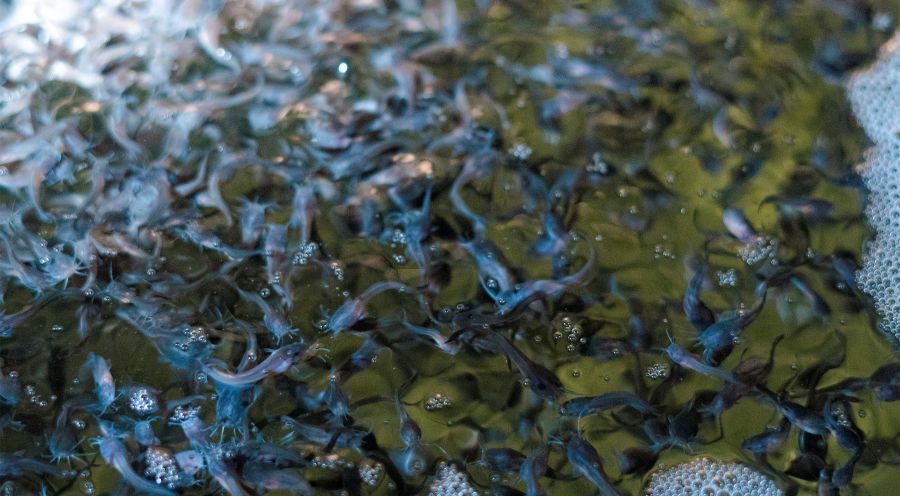
- Newly hatched fry (called larvae) feed on their yolk sacs for the first 2–3 days.
- Start feeding them with artemia or egg yolk after 3 days.
- Keep water clean by changing 30–40% daily.
5. Post-Hatching Management
- Transfer fry to nursery tanks after 7–10 days.
- Feed regularly with high-protein feeds.
- Maintain good water quality and monitor growth.
6. Common Problems and Solutions
| Problem | Possible Cause | Solution |
|---|---|---|
| Low hatch rate | Poor broodstock or wrong hormone dosage | Use mature broodstock and correct dosage |
| Egg fungus | Poor water quality | Use antifungal agents like methylene blue |
| Fry mortality | Poor oxygen or dirty water | Improve aeration and clean tanks daily |
7. Key Tips for Successful Catfish Hatching
- Always use fresh, clean, chlorine-free water.
- Keep water temperature stable.
- Avoid overcrowding in hatching tanks.
- Regularly monitor and remove unhatched eggs.
- Record each hatching cycle for performance tracking.
8. Conclusion
The catfish hatching process requires careful planning, patience, and proper handling. When done correctly, it produces healthy fry that grow fast and perform well in ponds. Every catfish farmer should master this process to achieve a profitable and sustainable fish farming business.