Irrigation and Water Management in Onion Farming
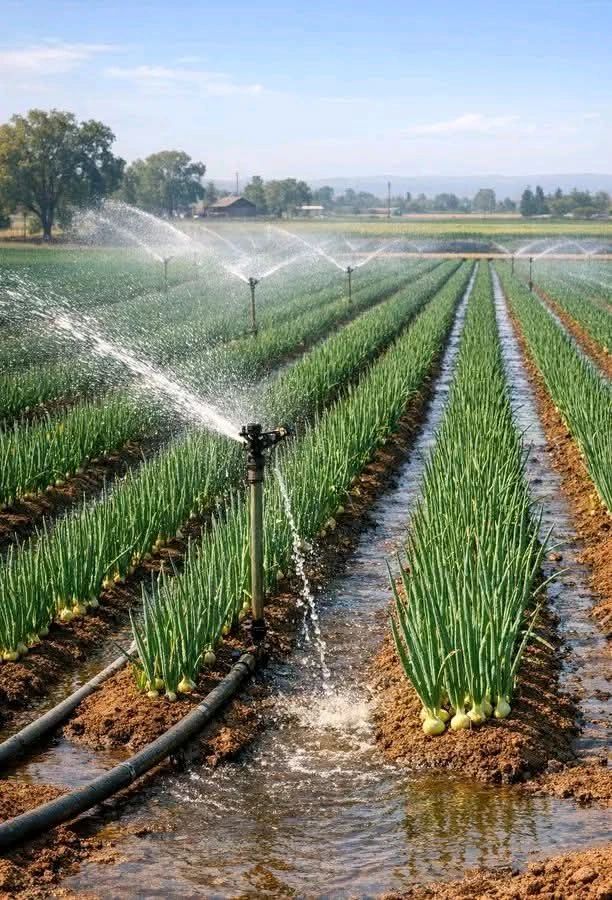
Water management is one of the most important parts of successful onion farming. Onions have relatively shallow roots, so they cannot depend on moisture stored deep in the soil. Young farmers need to provide enough water to keep the soil consistently moist without making it waterlogged.
How often should onions be watered?
How often you water onions depends on soil type, weather, plant age and irrigation method.
During hot and dry periods, onions may need watering every 2–3 days, while heavier soils may require less frequent irrigation. Sandy soils lose water faster and may need more frequent watering.
A good rule is to check the soil before irrigating. If the top few centimetres of soil are becoming dry, it is usually time to water.
Avoid allowing onions to repeatedly become completely dry and then flooding them with water. Irregular watering can affect bulb development and may contribute to small or poorly formed bulbs.
Best irrigation system for onion farming
Several irrigation methods can be used:
- Drip irrigation: Excellent for efficient water use and precise application.
- Sprinkler irrigation: Can provide relatively uniform coverage but may wet the foliage.
- Furrow irrigation: Common where farmers have access to sufficient water, but can use more water and requires proper field preparation.
- Watering cans: Suitable for small farms and gardens but labour-intensive.
For commercial onion production, drip irrigation is one of the most efficient choices, especially where water is limited.
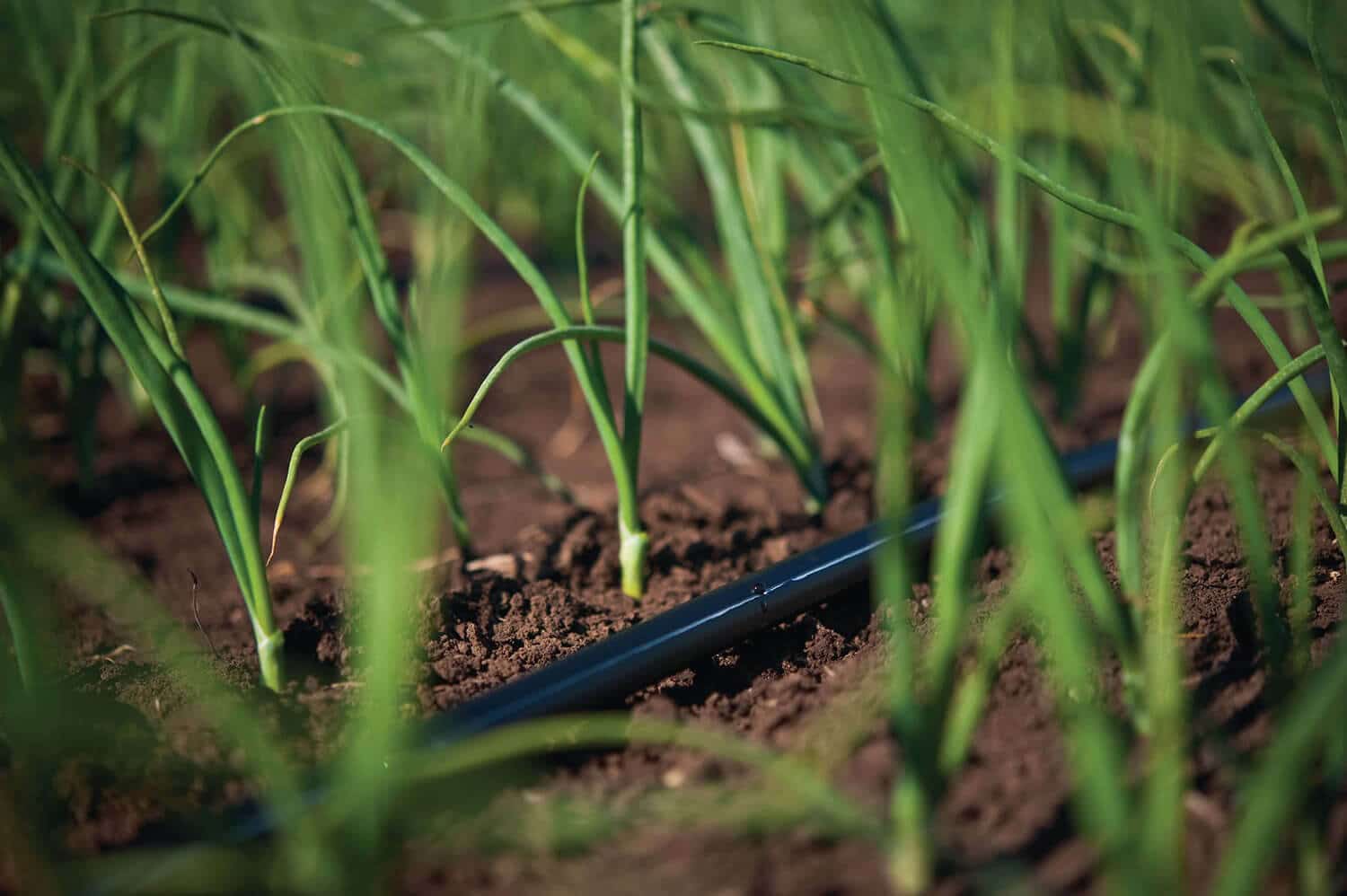
Drip irrigation for onion farming
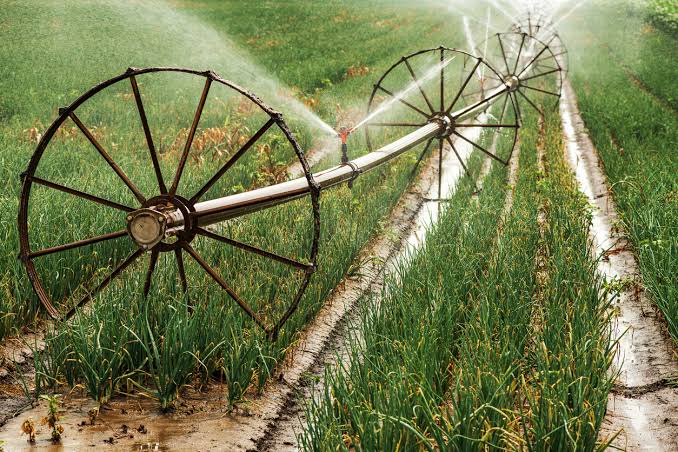
Drip irrigation delivers water slowly around the root zone instead of flooding the entire field.
Its major advantages include:
- Better water efficiency
- Less water lost through evaporation and runoff
- More consistent soil moisture
- Reduced leaf wetting compared with overhead irrigation
- Possibility of applying soluble fertilizers through the irrigation system
Young farmers using drip irrigation should make sure the lines are properly positioned and regularly check for blocked emitters. A blocked section can leave part of the field under-watered while other plants receive adequate moisture.
How to grow onions during the dry season
Dry-season onion farming can be very productive, but reliable irrigation is essential.
Before planting, make sure you have enough water for the entire production cycle rather than depending on occasional rainfall.
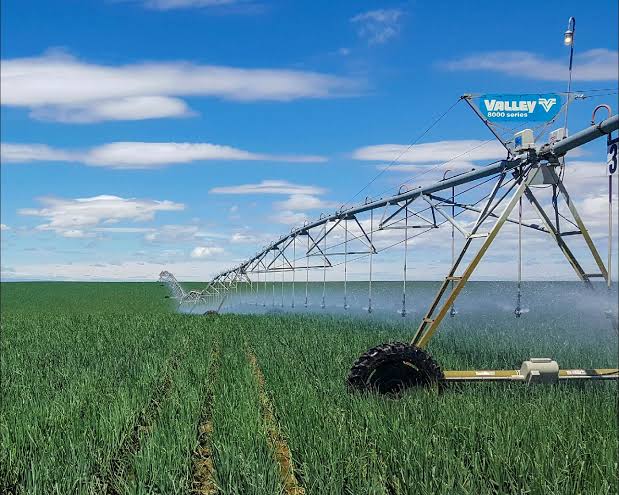
Important practices include:
- Prepare a reliable water source before planting.
- Use well-drained, fertile soil.
- Install or prepare your irrigation system before transplanting.
- Irrigate according to soil moisture and weather conditions.
- Mulch where appropriate to reduce evaporation and temperature fluctuations.
- Keep weeds under control because weeds compete with onions for water.
- Avoid excessive irrigation.
- Monitor plants frequently during hot weather.
In Nigeria, dry-season onion production can offer good opportunities, but water availability and irrigation costs should be included in the production budget.
When should you stop watering onions before harvest?
As onions approach maturity, irrigation should gradually be reduced.
When a large proportion of the onion tops begin to yellow, weaken and naturally fall over, the crop is approaching maturity. Excessive irrigation at this stage can delay proper curing and increase the risk of bulb problems.
Farmers should avoid suddenly flooding mature onions simply because the soil looks dry. The exact timing for stopping irrigation depends on the variety, soil, weather and maturity of the crop.
After harvest, onions also need proper curing in a dry, well-ventilated environment to improve storage life.
Problems caused by overwatering onions
Too much water can be just as harmful as too little.
Overwatering can lead to:
- Root problems
- Bulb rot
- Poor soil aeration
- Nutrient leaching
- Weak or unhealthy plants
- Increased disease pressure
- Poor bulb quality
- Delayed maturity
- Poor storage performance
If water remains around the roots for long periods, the roots may struggle to obtain enough oxygen. This is why good drainage is extremely important in onion farming.
How much water does onion farming require?
There is no single amount that applies to every onion farm because water requirements change throughout the crop cycle.
As a general planning figure, onions often require roughly 350–550 mm of total water over the growing season, including effective rainfall and irrigation. The actual requirement can be higher or lower depending on climate, soil, variety and crop duration.
For example:
1 mm of water over 1 hectare = 10,000 litres.
Therefore, 400 mm of water spread across one hectare represents about 4 million litres of water over the crop’s growing period.
However, this does not mean a farmer should apply that entire amount at once. Water should be divided into appropriate irrigation events according to the crop’s growth stage, soil moisture and weather.
Water management by growth stage
🌱 Nursery/early growth: Keep the soil adequately moist to support germination and establishment.
🌿 Vegetative growth: Maintain relatively consistent moisture as plants develop leaves and begin forming bulbs.
🧅 Bulb development: This is a particularly important period for avoiding moisture stress because inadequate water can restrict bulb growth.
🌾 Maturity: Gradually reduce irrigation as the crop approaches maturity and stop according to the crop’s maturity and harvesting conditions.
Final lesson for young onion farmers
Good irrigation is not about giving onions as much water as possible. It is about giving them the right amount at the right time.
Before planting onions, plan your water source, irrigation method, drainage and irrigation budget. A farmer who controls water properly can reduce waste, protect the crop from water-related problems and produce better-quality bulbs.
Leave a Reply