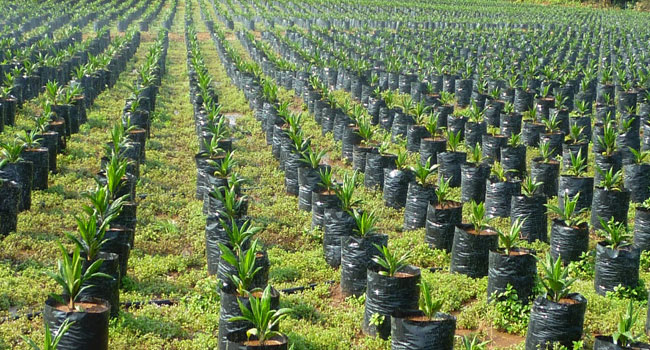
How Long Should Oil Palm Seedlings Stay in the Nursery?
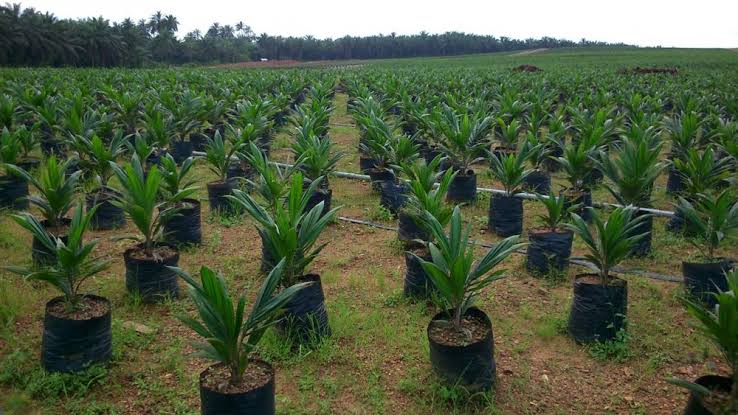
For a young oil palm farmer, knowing how long oil palm seedlings should remain in the nursery is very important. Transplanting seedlings too early can lead to poor establishment, while keeping them in the nursery for too long can cause the seedlings to become overgrown, root-bound, weak, or stressed after planting.
Generally, oil palm seedlings are raised in two nursery stages: the pre-nursery and the main nursery. The total nursery period is commonly around 12–15 months from germinated seed, depending on the nursery system, seedling growth and field conditions.
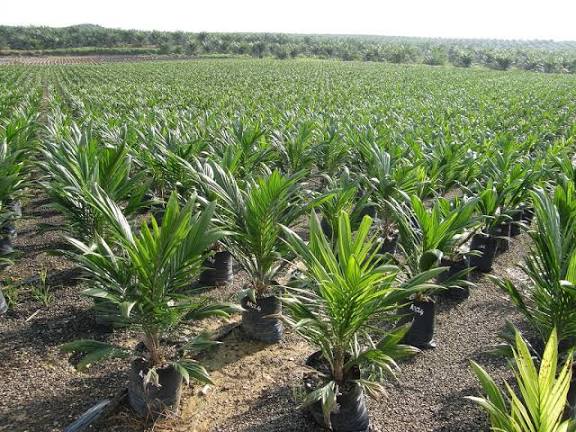
1. Pre-Nursery Stage: About 2–3 Months
The pre-nursery is the first stage after germinated oil palm seeds are planted.
At this stage, the young seedlings are usually grown in small nursery bags or containers under suitable shade and carefully watered.
The main objectives are to help the seedlings develop:
- Healthy roots
- Strong leaves
- A developing stem
- Good early vigour
- A healthy root system for transfer to the main nursery
The pre-nursery period generally lasts about 2–3 months.
However, farmers should not depend only on the number of months. The actual condition of the seedlings is also important.
A seedling that is growing slowly may need more time before being moved, while a vigorous seedling may be ready earlier.
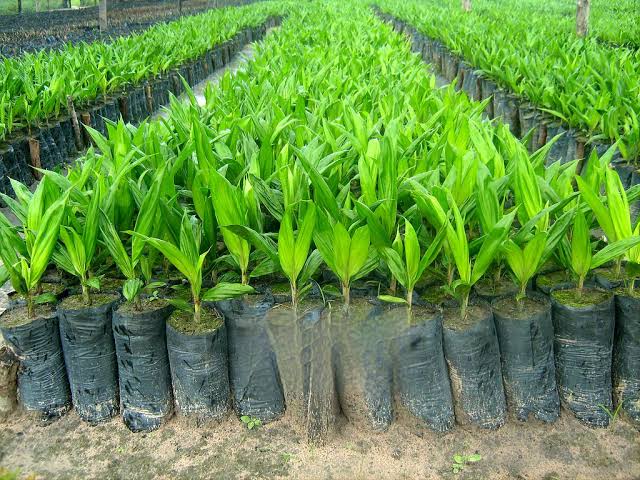
2. Main Nursery: About 9–12 Months
After the pre-nursery stage, healthy seedlings are transferred into larger polybags in the main nursery.
This is where the seedlings develop into stronger planting materials suitable for establishment in the plantation.
The main nursery normally lasts approximately 9–12 months.
During this period, farmers need to pay close attention to:
- Regular watering
- Weed control
- Proper spacing between nursery bags
- Fertilizer management
- Pest and disease monitoring
- Removal of unhealthy seedlings
- Good drainage
- Protection from physical damage
Poor management during the main nursery can produce weak seedlings even when the original planting material is good.
3. How Old Should a Seedling Be Before Field Planting?
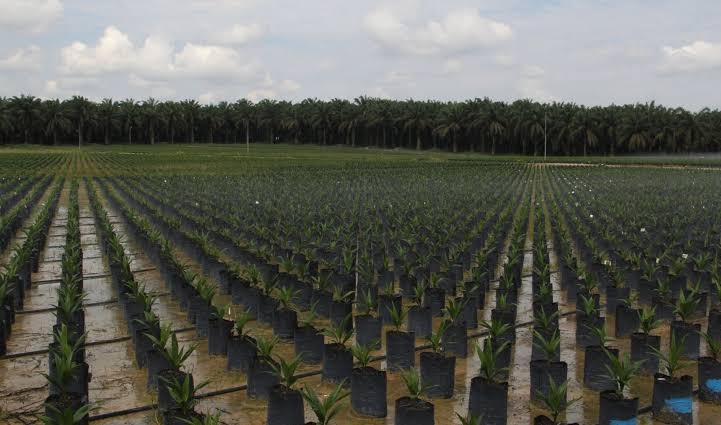
For many commercial oil palm production systems, seedlings are planted in the field at approximately 12–15 months after germination, depending on nursery management and seedling development.
The important point is that age alone should not determine when a seedling is transplanted.
Before moving seedlings to the plantation, examine their overall condition.
A good field-ready seedling should generally have:
- Healthy green leaves
- Strong and upright growth
- A well-developed stem
- A healthy root system
- No serious pest or disease damage
- Good overall vigour
- No obvious nutrient deficiency
- A size appropriate for its age
Farmers should avoid selecting seedlings simply because they are the tallest.
A very tall but weak or poorly developed seedling may not perform as well as a shorter, vigorous and healthy seedling.
4. Why You Should Not Keep Seedlings in the Nursery Too Long
Keeping oil palm seedlings in the nursery beyond their appropriate planting stage can create problems.
As the seedling grows, its roots require more space. If the polybag becomes too small, the roots can become restricted or distorted.
Overgrown seedlings may also experience transplanting stress when eventually moved to the field.
Other possible problems include:
- Root restriction
- Poor root development
- Nutrient competition
- Increased watering requirements
- Greater nursery maintenance costs
- Difficulties during transportation
- Greater transplanting stress
For this reason, farmers should plan their land preparation before the seedlings reach field-planting age.
5. Do Not Transplant Weak Seedlings Just Because They Are Old Enough
The opposite mistake is also common.
A farmer may have seedlings that are 12 months old and assume that every seedling must immediately be planted.
This is not always correct.
If a seedling is severely stunted, diseased, badly damaged or poorly developed, it should not automatically be planted simply because it has reached a certain age.
Seedling quality is more important than age alone.
Before transplanting, inspect the nursery carefully and remove seedlings that do not meet the required quality standard.
6. Prepare the Plantation Before the Seedlings Are Ready
One important lesson for young farmers is that field preparation should begin before the nursery period ends.
Do not wait until the seedlings are ready before preparing the plantation.
Farmers should plan activities such as:
- Land clearing
- Drainage where necessary
- Field layout
- Lining and spacing
- Planting-hole preparation
- Cover-crop establishment where appropriate
- Weed management
- Transport arrangements
- Labour availability
When the field is ready at the right time, healthy seedlings can be transplanted without unnecessary delays.
7. Best Time to Transplant Oil Palm Seedlings
In areas with a suitable rainy season, transplanting is generally planned so that young palms have adequate soil moisture after field establishment.
However, the exact timing depends on the rainfall pattern of your location.
Avoid transplanting into extremely dry soil unless adequate irrigation or water is available.
The seedling should be watered properly before and after transplanting, and the field should have good drainage because oil palm does not perform well when its roots remain in prolonged waterlogged conditions.
8. A Simple Nursery Timeline for Young Farmers
A simple way to remember the nursery process is:
Germinated seed → Pre-nursery → Main nursery → Seedling selection → Field planting
Pre-nursery
Approximately 2–3 months
Focus on early root and leaf development.
Main nursery
Approximately 9–12 months
Focus on producing strong, healthy planting material.
Field establishment
Approximately 12–15 months from germination
Select only vigorous, healthy seedlings that are suitable for field planting.
9. What Young Palm Farmers Should Remember
There is no single number of months that makes every oil palm seedling ready for planting.
The 12–15 month period is a useful general guide, but farmers should also consider seedling health, growth, root development, nursery management, rainfall and field conditions.
More importantly, start with genuine, high-quality planting material from a reliable source. Good nursery management cannot completely compensate for poor-quality or unsuitable planting material.
Final Advice
For a young palm plantation farmer, think of the nursery as the foundation of the plantation.
A healthy seedling has a much better opportunity to establish strongly after transplanting. Give the seedlings enough time to develop, but do not keep them unnecessarily long in undersized polybags.
Aim for healthy, vigorous, properly developed seedlings—not simply seedlings that have reached a particular age.
If your seedlings are around 12–15 months old, healthy and well developed, and your field is properly prepared, they may be ready for transplanting under suitable local conditions.
Leave a Reply