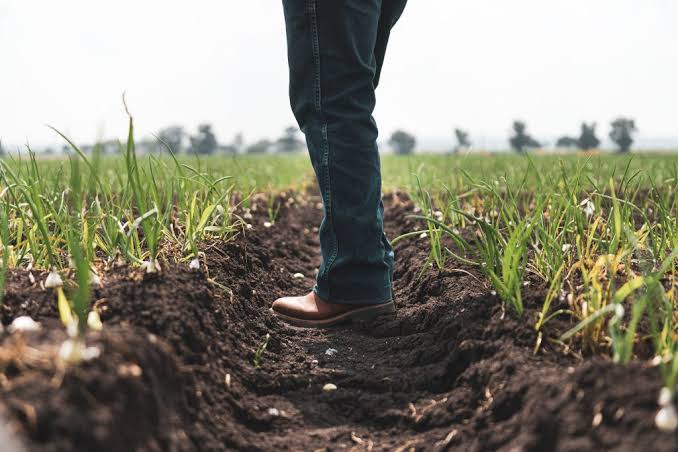
🌱 Land Preparation and Planting: A Practical Guide for Young Onion Farmers in Nigeria
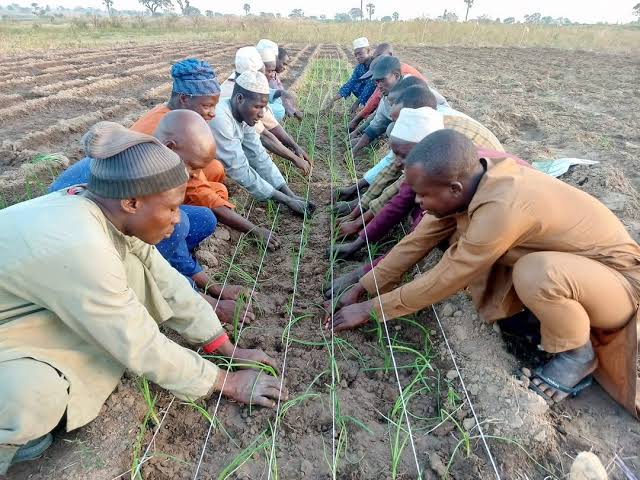
Onion farming can be profitable when you get the land, planting time, nursery management, spacing and transplanting right. Many young farmers lose money not because onions are difficult to grow, but because they start planting without proper preparation.
Here is a practical guide to help you establish your onion farm correctly.
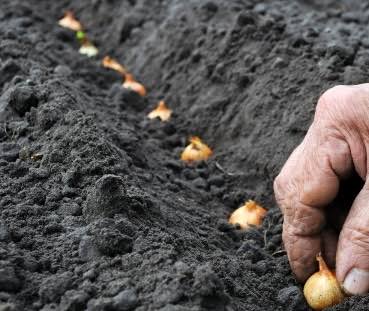
1. How to Choose Land for Onion Farming
Choose land that receives plenty of sunlight and is not prone to flooding or waterlogging.
A good onion farm should have:
- Well-drained soil that does not hold excess water.
- Loamy or sandy-loam soil that is loose enough for bulb development.
- Good access to clean irrigation water, especially during the dry season.
- Adequate sunlight, preferably an open field without heavy shade.
- Easy access to roads or markets for transporting harvested onions.
- Soil with good fertility and organic matter.
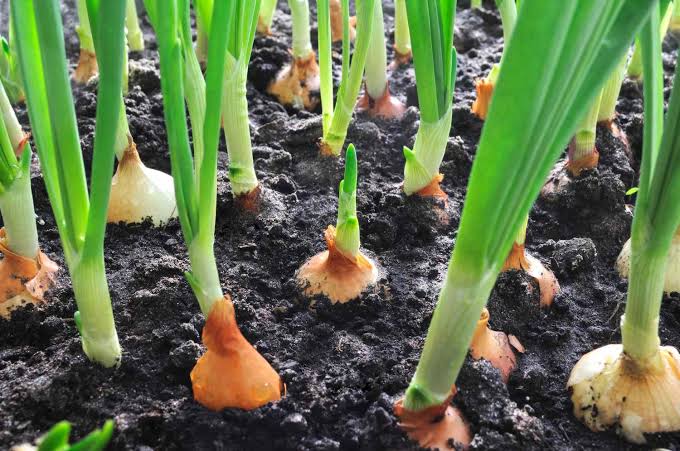
Avoid land where water remains after rainfall or irrigation. Onion roots are relatively shallow, and excessive moisture can encourage root diseases and poor bulb development.
2. How to Prepare Land for Onion Planting
Begin land preparation several weeks before planting.
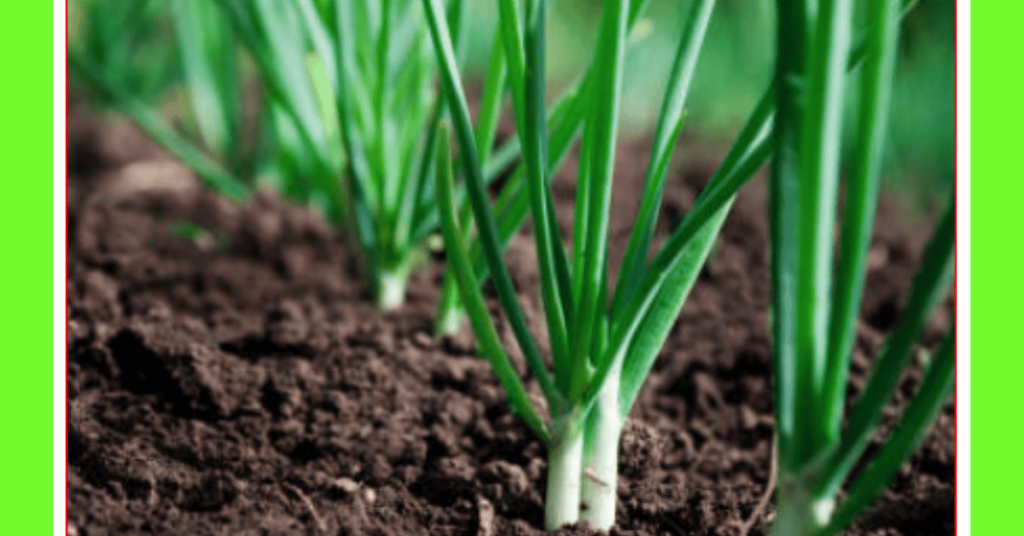
Clear weeds, bushes and previous crop residues. Plough or dig the soil properly, then break large soil clods and make the soil fine and loose.
For small farms, you can use a hoe to prepare the soil. For larger farms, tractor ploughing and harrowing can reduce labour.
Add well-decomposed organic manure or compost where available. Avoid applying fresh poultry manure or fresh animal manure directly before planting because it can damage young seedlings and may encourage some pest and disease problems.
Onions perform best when the soil is loose enough for the developing bulb to expand easily.
Raised beds are useful
In areas where drainage is a problem, construct raised beds. Raised beds make irrigation easier and help prevent water from remaining around the onion roots.
3. Best Time to Plant Onions in Nigeria
Planting time depends on your location, variety and irrigation availability.
In many northern parts of Nigeria, onions are commonly grown during the dry season under irrigation, when farmers can control water supply and rainfall is low.
The exact planting window should be determined by your local climate and the variety you are using. Excessive rainfall during bulb formation can increase disease pressure and reduce bulb quality.
Before planting, ask experienced farmers or agricultural extension officers in your area about the best local planting window.
4. How to Make Onion Nursery Beds
If you are growing onions from seed for transplanting, prepare a nursery first.
Choose a location with:
- Good drainage
- Easy access to water
- Adequate sunlight
- Fertile, loose soil
Make a raised nursery bed approximately 1 metre wide so you can reach the seedlings without stepping on the bed.
Mix the soil thoroughly and remove stones, roots and large clods.
Make shallow lines and sow the onion seeds thinly. Avoid putting too many seeds in one spot because overcrowding produces weak, thin seedlings.
After sowing, cover the seeds lightly with fine soil and water gently.
Keep the nursery moist but never waterlogged.
5. How to Grow Onions From Seeds
Use good-quality seed from a reliable source and choose a variety suited to your location.
Sow the seeds in the nursery and maintain consistent moisture during germination.
Young seedlings need protection from:
- Excessive sunlight or heat immediately after emergence
- Heavy rainfall
- Weeds
- Insects
- Diseases
Do not allow weeds to compete with the seedlings. Because onion seedlings are small, weeds can quickly overtake them.
As the seedlings develop, gradually expose them to normal field conditions before transplanting. This helps reduce transplant shock.
6. How to Transplant Onion Seedlings
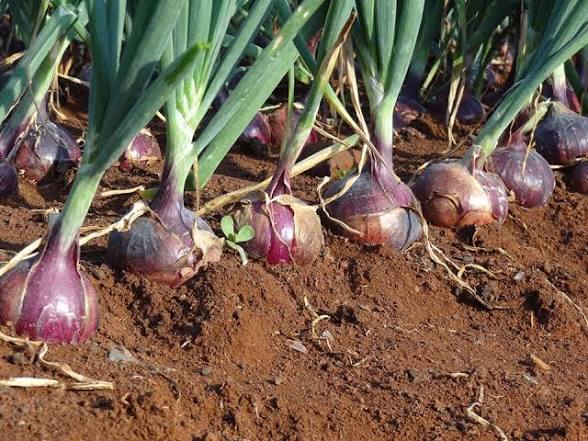
Onion seedlings are commonly transplanted when they are strong enough to survive field conditions, often around 6–8 weeks after sowing, depending on variety and growing conditions.
Before transplanting:
- Prepare the field properly.
- Irrigate the nursery so the soil is moist.
- Carefully lift the seedlings without badly damaging their roots.
- Select healthy seedlings.
- Avoid planting weak, diseased or badly damaged seedlings.
- Plant the seedlings at the correct depth.
- Water immediately after transplanting.
Do not bury the seedlings too deeply. The roots should be covered while the growing point and upper portion remain above the soil.
Transplanting in the late afternoon or when the weather is less stressful can help reduce transplant shock.
7. Direct Seeding vs Transplanting Onions
Both methods can work, but they have different advantages.
| Method | Advantages | Disadvantages |
| Direct seeding | Less transplant labour, plants establish without transplant shock | Weed control can be difficult; seedling establishment may be uneven |
| Transplanting | Easier to select healthy seedlings; better plant population control | Requires nursery management and additional labour |
For many young farmers, nursery production followed by transplanting can make it easier to establish a uniform crop, especially when they are still learning onion production.
8. Correct Spacing for Onion Farming
Spacing affects bulb size, competition and the number of onions you can harvest.
A commonly used spacing is around 10 cm between plants and 15 cm between rows, although the best spacing can vary according to variety, soil fertility and the bulb size you want.
Closer spacing can produce more bulbs per area but may result in smaller bulbs. Wider spacing can allow larger bulbs but reduces the number of plants per hectare.
Always consider the recommended spacing for your specific variety.
9. How Many Onion Plants Can Be Planted Per Hectare?
At a spacing of 10 cm × 15 cm, theoretical plant population is:
1 hectare = 10,000 m²
Each plant occupies:
0.10 m × 0.15 m = 0.015 m²
Therefore:
10,000 ÷ 0.015 = approximately 666,667 plants per hectare.
However, this is a theoretical population. Real farms will have paths, bed edges, irrigation channels and gaps, so the actual number may be lower.
If you use wider spacing, the plant population decreases.
For example:
- 10 cm × 10 cm: about 1,000,000 plants/ha
- 10 cm × 15 cm: about 667,000 plants/ha
- 15 cm × 15 cm: about 444,000 plants/ha
Don’t choose extremely close spacing simply because you want more plants. Bulb size, variety, fertility and market demand should determine your final spacing.
🌱 Important Advice for Young Onion Farmers
Your onion production does not begin when you transplant the seedlings. It begins when you select the land and prepare the soil.
A young farmer should pay attention to these five things:
Good land → good seed → healthy nursery → correct spacing → proper irrigation.
If any of these is poorly managed, your final harvest can suffer.
Also keep farm records. Record the quantity of seed used, nursery date, transplanting date, fertiliser application, irrigation, labour expenses, pest-control costs and harvest quantity. These records will help you know whether your onion farm is actually profitable.
Final takeaway
Successful onion farming requires careful planning from the beginning. Choose well-drained fertile land, prepare fine soil, establish a healthy nursery, transplant strong seedlings carefully and maintain the correct spacing. With good irrigation and proper crop management, young farmers can establish a productive onion farm and build experience for larger-scale production.
Leave a Reply