Oil Palm Fertilizer Application Schedule From Planting to Harvest
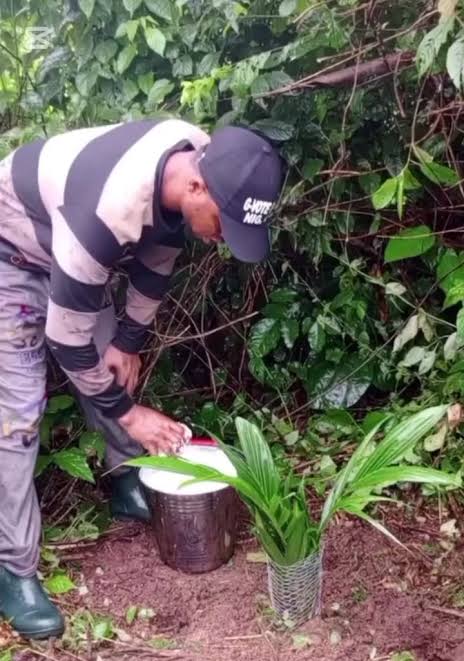
Fertilizer management is one of the most important parts of establishing a productive oil palm plantation. A young palm needs the right nutrients to develop strong roots, leaves and a healthy trunk, while mature palms require sufficient nutrients to support flowering, fruit formation and bunch production.
However, there is no single fertilizer dose that is correct for every oil palm plantation. Soil type, soil fertility, rainfall, palm age, planting density, previous crops and nutrient losses all affect fertilizer requirements. Ideally, fertilizer decisions should be guided by soil and leaf analysis.
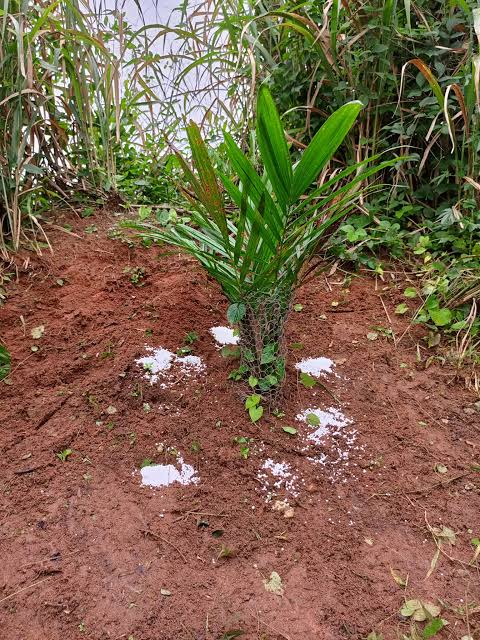
For a young plantation farmer, the goal should not simply be to apply more fertilizer. The goal is to apply the right nutrients, at the right time and in the right quantity.
Year 1: Establishing the Young Palm
The first year is focused on helping newly planted palms establish their root system and produce healthy leaves.
At planting, farmers should concentrate on good field preparation, proper planting and adequate moisture. Fertilizer should not be placed directly against the palm stem because this can damage young roots.
During the first year, nutrients such as nitrogen, phosphorus, potassium and magnesium may become important as the palm begins active growth. The exact fertilizer and rate should depend on soil-test results and local agronomic recommendations.
What to focus on in Year 1
- Encourage strong root development.
- Maintain healthy green leaves.
- Control weeds around the palm.
- Prevent fertilizer from touching the stem.
- Apply fertilizer when there is adequate soil moisture.
- Monitor the palms for nutrient deficiency symptoms.
- Use soil analysis where possible to determine nutrient requirements.
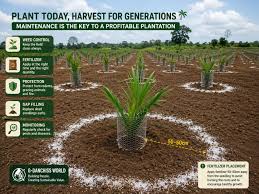
Young palms have relatively small root systems, so fertilizer should generally be distributed around the effective root zone rather than dumped in one spot.
Year 2: Building the Palm
By the second year, the palm has developed a larger root system and canopy. Nutrient requirements normally increase as the plant produces more leaves and builds its structure.
Nitrogen is important for vegetative growth and leaf production, while potassium becomes increasingly important as the palm develops and prepares for future fruit production.
Phosphorus contributes to root development and plant establishment, while magnesium is important for chlorophyll formation and photosynthesis.
Instead of automatically increasing fertilizer every year, farmers should monitor palm growth and use soil and leaf analysis whenever possible.
What to focus on in Year 2
- Maintain vigorous leaf production.
- Develop a strong and healthy canopy.
- Maintain adequate potassium and magnesium.
- Continue effective weed management.
- Apply fertilizer according to soil fertility and palm condition.
- Watch for yellowing, poor growth or other signs of nutrient deficiency.
Year 3: Preparing for Production
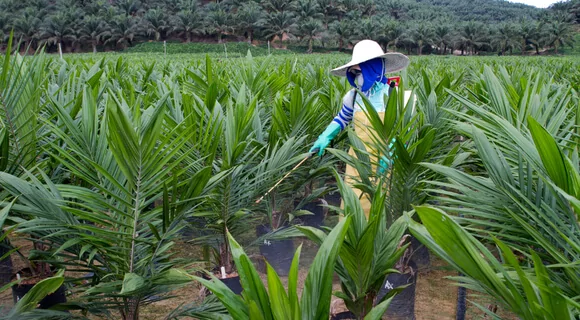
By the third year, palms are becoming more established and may begin approaching their productive stage, depending on planting material, management and growing conditions.
Nutrient management becomes particularly important because the palm is moving from mainly vegetative development toward reproductive growth.
Potassium deserves particular attention because oil palm removes substantial amounts of potassium from the field through harvested fresh fruit bunches. However, this does not mean every plantation should receive the same amount of potassium fertilizer.
The correct rate should be determined according to soil fertility, leaf nutrient status, expected yield and other relevant factors.
What to focus on in Year 3
- Maintain a healthy and productive canopy.
- Support the transition into fruit production.
- Pay close attention to potassium requirements.
- Maintain adequate nitrogen and magnesium.
- Monitor palm growth and nutrient status.
- Continue fertilizer applications based on evidence rather than guesswork.
Mature Palms: Maintaining Production
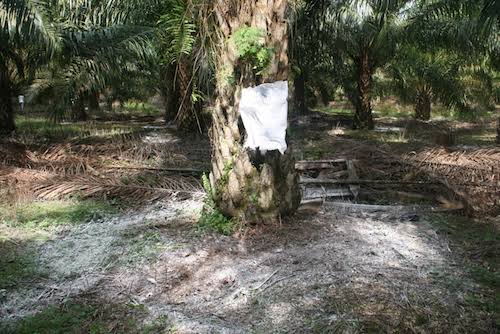
Once palms reach maturity and are producing regular fresh fruit bunches, fertilizer management becomes closely connected to yield.
Every harvest removes nutrients from the plantation. If these nutrients are not adequately replaced, soil fertility can decline and palm productivity may eventually suffer.
Mature palms commonly require attention to nitrogen, potassium and magnesium, while phosphorus and other nutrients should be supplied when soil or leaf analysis indicates a need.
Potassium is particularly important in productive plantations because of the large quantity of potassium associated with fruit production and harvesting.
A mature plantation should therefore have a nutrient-management programme rather than occasional fertilizer application whenever the farmer feels the palms need it.
Rainy-Season Fertilizer Application
For many oil palm-growing areas in Nigeria, fertilizer application is best planned around the rainy season, when adequate soil moisture can help dissolve and move nutrients into the soil for uptake by palm roots.
However, farmers should avoid applying fertilizer immediately before heavy rainfall when there is a significant risk of nutrients being washed away.
A practical approach is to apply fertilizer when the soil is sufficiently moist but when extreme rainfall is not expected immediately afterward.
Good rainy-season practices
- Apply fertilizer when there is adequate soil moisture.
- Avoid spreading fertilizer immediately before very heavy rain.
- Do not apply fertilizer onto severely waterlogged soil.
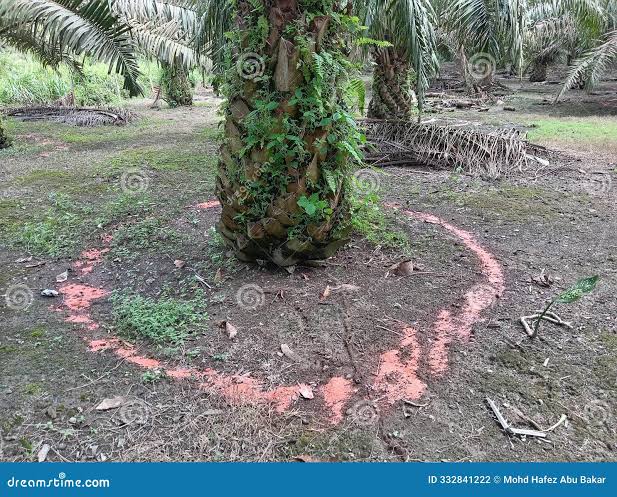
- Keep fertilizer away from direct contact with the palm stem.
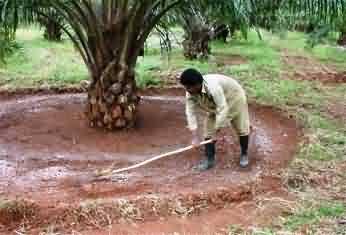
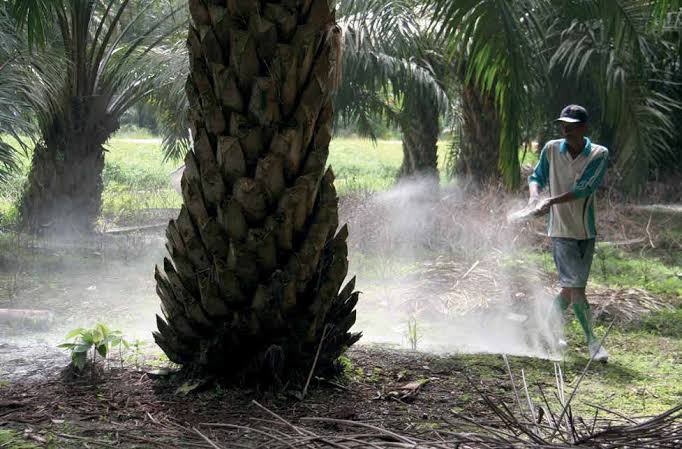
- Spread fertilizer evenly around the appropriate root zone.
- Keep records of application dates and quantities.
Why You Should Not Use One Universal Fertilizer Dose
One of the common mistakes made by new plantation farmers is asking for a single fertilizer quantity that can be applied to every palm.
This approach can be misleading.
A plantation on a nutrient-rich soil may require a different fertilizer programme from one on an exhausted or sandy soil. Likewise, a one-year-old palm does not have the same nutrient requirements as a mature palm carrying heavy fruit bunches.
Other factors include:
- Soil type.
- Soil pH.
- Existing nutrient levels.
- Palm age.
- Planting density.
- Rainfall.
- Yield level.
- Previous fertilizer applications.
- Nutrient losses through harvesting.
- Presence of nutrient deficiencies.
This is why soil testing and leaf analysis are valuable tools for professional fertilizer management.
Understanding the Major Nutrients
Nitrogen (N)
Nitrogen supports leaf production, vegetative growth and overall palm development.
Too little nitrogen can result in poor growth and pale or yellowish leaves. However, applying excessive nitrogen is not automatically beneficial and can create nutrient-management problems.
Phosphorus (P)
Phosphorus plays an important role in root development and plant energy processes.
Young palms may require attention to phosphorus, particularly where soil tests indicate low availability.
Potassium (K)
Potassium is extremely important in oil palm nutrition, particularly as palms become productive.
It contributes to several physiological processes and is strongly associated with maintaining good palm performance and fruit production.
Because harvested bunches remove nutrients from the plantation, potassium management becomes particularly important in mature plantations.
Magnesium (Mg)
Magnesium is a central component of chlorophyll and therefore plays an important role in photosynthesis.
Magnesium deficiency can affect the appearance and performance of the palm, so farmers should not ignore it when diagnosing nutrient problems.
How a Young Farmer Should Apply Fertilizer
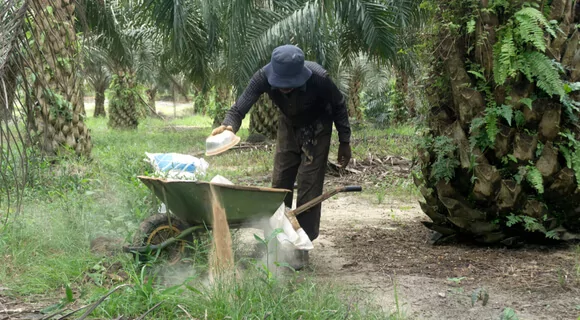
Do not simply pour fertilizer against the trunk.
Instead:
- Identify the correct fertilizer.
Choose fertilizer based on the nutrient needs of the plantation rather than buying a product simply because it is popular. - Determine the appropriate rate.
Use soil and leaf analysis, together with recommendations from qualified oil-palm agronomists or research institutions. - Apply at the appropriate time.
Rainy-season applications can be useful because soil moisture supports nutrient availability, but avoid periods of extreme rainfall. - Spread fertilizer properly.
Distribute it around the effective root zone rather than concentrating it directly beside the stem. - Keep records.
Record the fertilizer type, quantity, date and field or block where it was applied. - Monitor the palms.
Look at leaf colour, growth, canopy development and eventual bunch production.
Example of a Simple Plantation Schedule
| Palm Stage | Main Management Focus | Fertilizer Approach |
|---|---|---|
| Year 1 | Root establishment and healthy vegetative growth | Apply nutrients according to soil condition and young-palm requirements |
| Year 2 | Canopy and structural development | Adjust nutrient programme according to palm growth and soil/leaf results |
| Year 3 | Preparation for increasing production | Pay closer attention to potassium and overall nutrient balance |
| Mature palms | Fruit production and nutrient replacement | Base fertilizer programme on yield, soil/leaf analysis and nutrient removal |
This table is a management framework, not a universal fertilizer prescription.
Important Mistakes to Avoid
Don’t apply fertilizer blindly
More fertilizer does not necessarily mean more fruit. Excessive or poorly balanced fertilizer can waste money and may create nutrient imbalances.
Don’t copy another farmer’s fertilizer rate
A successful farmer’s fertilizer programme may work on their soil and plantation but not necessarily on yours.
Don’t ignore potassium
As palms become productive, potassium becomes increasingly important because nutrients are removed from the plantation with harvested bunches.
Don’t forget magnesium
A fertilizer programme that focuses only on NPK may overlook other important nutrients.
Don’t fertilize dry soil carelessly
Where there is insufficient moisture, nutrient uptake can be poor. Time applications around suitable soil-moisture conditions.
Don’t place fertilizer against the trunk
Keep fertilizer appropriately distributed around the palm’s root zone to reduce the risk of root or stem damage.
Final Advice for Young Oil Palm Farmers
A good fertilizer programme should develop with the plantation.
Year 1: concentrate on establishment and healthy growth.
Year 2: build a strong canopy and root system.
Year 3: prepare the palms for increasing production and pay closer attention to nutrient balance.
Mature palms: replace nutrients removed through production and maintain the fertility required for sustainable yields.
Most importantly, do not treat fertilizer recommendations as a fixed recipe. Soil and leaf analysis can tell you much more about what your palms actually need. Combine those results with palm age, yield, rainfall, soil type and professional agronomic advice.
For a young farmer, learning how to manage nutrients correctly from the beginning can save money, protect soil fertility and help build a plantation capable of producing well for many years.
Leave a Reply