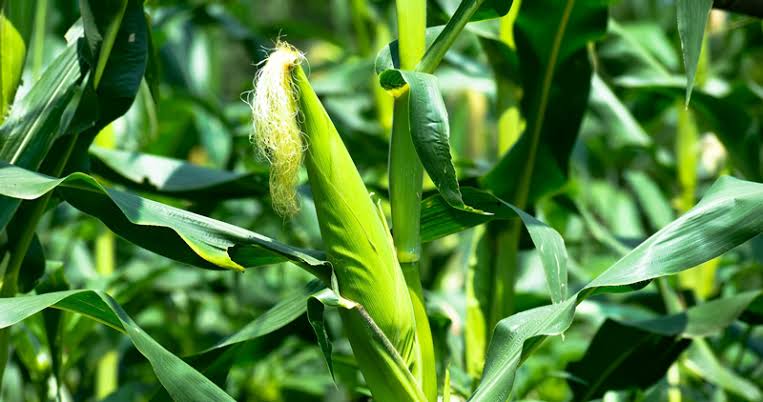

Corn Farming in Nigeria: A Complete Beginner’s Guide
Corn (maize) is one of the most widely grown crops in Nigeria. It is profitable, grows in all regions, and has a high demand for food, feed, and industrial uses. If you are planning to go into corn farming, this guide will educate you on everything you need to know—from land preparation to harvest.

Why Corn Farming Is a Good Business in Nigeria
- High demand for food (pap, tuwo, roasted corn, boiled corn).
- Used in animal feed production.
- Used in industries (starch, flour, alcohol).
- Short maturity period (70–100 days depending on variety).
- Can be grown twice a year (rainy season & dry season with irrigation).
- Good market price and easy to sell.
Requirements to Start Corn Farming
Before starting, make sure you have:
- Suitable farmland (loamy soil is best)
- Good corn seeds / hybrid varieties
- Fertilizers (NPK & Urea)
- Herbicides & pesticides (for weeds and pests)
- Farming tools (hoe, cutlass, knapsack sprayer)
- Capital (depending on size of farm)
- Knowledge of planting time & management
Best Corn Seed Varieties in Nigeria
Choose improved seeds for higher yield:
Hybrid Varieties (Best for business):
- SAMMAZ 15
- SAMMAZ 32
- Oba Super 2
- Oba 98
- BR9928

Open-Pollinated Varieties (cheaper, lower yield):
- Ife Maize
- TZM varieties
Hybrids produce more cobs, resist diseases better, and mature faster.
Best Planting Season for Corn in Nigeria
Rain-fed planting
- Southern Nigeria: March–April (early season), August (late season)
- Northern Nigeria: May–June (wet season), July–August (late season)
Dry-season maize
- November–January (with irrigation or river valley land)
Step-by-Step Guide to Starting Corn Farming in Nigeria
1. Land Selection
Choose:
- Loamy or sandy-loam soil
- A flat or gentle slope area
- Land with good sunlight (corn needs full sun)
Avoid waterlogged areas.
2. Land Preparation
- Clear the land (remove weeds, shrubs).
- Plough the soil (1–2 times).
- Harrow to make soil fine.
- Make ridges or leave soil flat, depending on your farming style.
Tip: Good land preparation helps roots grow deep and improves yield.

3. Planting Your Corn
- Spacing: 75 cm between rows × 25 cm between plants
- Seed depth: 3–5 cm
- Seeds per hole: 1–2 seeds
- Seed rate: 20–25 kg per hectare
Plant early in the rainy season to reduce drought stress.
4. Fertilizer Application (Very Important!)
First fertilizer (basal):
- Apply NPK 15-15-15 at 2 weeks after planting
- Rate: 4–5 bags per hectare
Second fertilizer (top-dressing):
- Apply Urea or CAN fertilizer at 5–6 weeks
- Rate: 2–3 bags per hectare
Apply fertilizer 5 cm away from the plant to avoid burning.
5. Weed Control
Weeds reduce yield drastically. Control them early.
Methods
- Herbicides:
- Pre-emergence: Atrazine + Paraquat
- Post-emergence: Glyphosate (avoid spraying directly on corn)
- Manual weeding:
- First weeding: 2–3 weeks
- Second weeding: 5–7 weeks
6. Pest & Disease Control
Watch out for:
Common Pests
- Armyworms
- Stem borers
- Grasshoppers
Control
- Use chemicals like Lambda Super, Cypermethrin, or Emamectin.
- Spray every 2–3 weeks if needed.
7. Irrigation (Optional but profitable)
If you want to farm during dry season:
- Use drip irrigation, sprinklers, or canal irrigation.
- Water the field 2–3 times a week.
Dry-season maize gives higher profit because less competition.
8. Harvesting
Corn matures in 70–100 days depending on variety.
Harvest Indicators
- Husk turns brown
- Cobs become dry and hard
- Seeds dent inward slightly (for dent varieties)
For fresh corn, harvest earlier when cobs are still green and milky.
9. Marketing
Target:
- Local markets
- Poultry feed mills
- Food processors
- Roadside sellers
- Wholesale grain buyers
Prices increase during dry season and off-season.
Profitability of Corn Farming in Nigeria
Profit depends on:
- Size of land
- Cost of labour & inputs
- Yield per hectare (hybrid maize gives 4–8 tons)
Corn farming is profitable because:
- Low production cost
- Quick harvest
- High demand
Tips to Succeed as a New Corn Farmer
- Use hybrid seeds (they produce much more).
- Plant early in the rainy season.
- Control weeds within the first 3–5 weeks.
- Apply fertilizer at the right time.
- Monitor pests and spray early.
- Sell during periods of high demand for better profit.
Conclusion
Corn farming in Nigeria is one of the easiest and most profitable crop ventures for beginners. With good land, improved seeds, timely planting, and proper management, you can harvest high yields and make excellent returns.


