Land preparation is one of the most important steps in yam farming. For young farmers who want to achieve high yields, preparing the land properly before planting helps the yam tubers grow well and remain healthy throughout the season. In this guide, we will explain the basic land preparation steps for yam farming in Nigeria.

1. Choose the Right Land for Yam Farming
Before you begin, select fertile, well-drained soil. Yams grow best in loamy or sandy-loam soil rich in organic matter. Avoid clay or waterlogged areas because excess water can cause yam rot and poor sprouting.
Tip: Test your soil pH; yam performs best in slightly acidic to neutral soil (pH 5.5 – 7.0).
2. Clear the Land
Start by clearing bushes, weeds, and stumps from your farmland. This allows sunlight to reach the soil and makes it easier to work.
You can use:
- Manual clearing: Using cutlass or hoe.
- Mechanical clearing: Using a tractor or bulldozer (ideal for large-scale farms).
After clearing, burn or compost the weeds to improve soil fertility naturally.
3. Ploughing and Tilling the Soil
Ploughing helps to loosen the soil, allowing yam roots to penetrate easily. Tilling improves aeration and makes the soil soft enough for tuber expansion.
If possible, plough the land 2–3 times before planting. This helps mix organic matter and breaks large soil clods.
4. Create Mounds or Ridges
Yams are mostly planted on mounds or ridges, depending on your region and rainfall pattern.
- In areas with heavy rainfall, ridges are better to reduce waterlogging.
- In areas with moderate rainfall, mounds are preferred.
Mounds should be about 1 meter apart and 30–40 cm high to allow enough space for yam tubers to grow big and healthy.

5. Add Organic Manure or Compost
Before planting, apply well-decomposed organic manure such as poultry droppings, goat manure, or compost to each mound or ridge. This step boosts soil nutrients and improves yield naturally. Avoid using fresh manure—it can burn the yam seed or attract pests.
6. Mark Planting Spots
Mark the exact points where each yam sett (seed yam) will be planted. Proper spacing helps reduce competition for nutrients and sunlight. The standard spacing is about 1 meter by 1 meter between mounds.
7. Set Up Yam Stakes Early
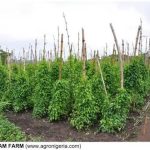
Yam vines need support as they grow. Setting up stakes (sticks or poles) before or immediately after planting makes management easier and prevents vine damage later.
Conclusion
Preparing your land properly before planting yam is the foundation of a successful harvest. As a young farmer in Nigeria, following these steps—clearing, ploughing, making mounds, adding manure, and staking early—will help you achieve better yields and healthy yam tubers.
Start your yam farming journey with good preparation, and your harvest will reward your hard work!