
Share the post "”Cassava Harvesting Guide in Nigeria: When and How to Harvest for Maximum Yield”"
Cassava is one of Nigeria’s most important crops, providing food and income for millions of farmers. Understanding when cassava is ready for harvest is crucial to achieving good yield and quality. Generally, cassava is ready for harvest 8–12 months after planting, depending on the variety, soil type, and farming practices.
In this article, we’ll educate young cassava farmers in Nigeria on the right time to harvest cassava, how to identify maturity signs, and the best practices for harvesting to reduce loss.
When Is Cassava Ready for Harvest?
Cassava takes between 8 to 12 months to mature after planting. The exact time depends on several factors:
- Cassava Variety:
- Early-maturing varieties such as TMS 30572 or TME 419 can be ready in 8–10 months.
- Late-maturing varieties like NR 8082 may take up to 12–15 months to reach full maturity.
- Soil Fertility:
Cassava grown in fertile, well-drained soil matures faster than those grown in poor or waterlogged soils. - Weather Conditions:
Adequate rainfall during growth and dry weather during harvest improve both yield and root quality.
Signs That Cassava Is Ready for Harvest
Before you start harvesting, check for the following signs:
- Leaves turn yellow and begin to fall off.
- The stem becomes hard and woody.
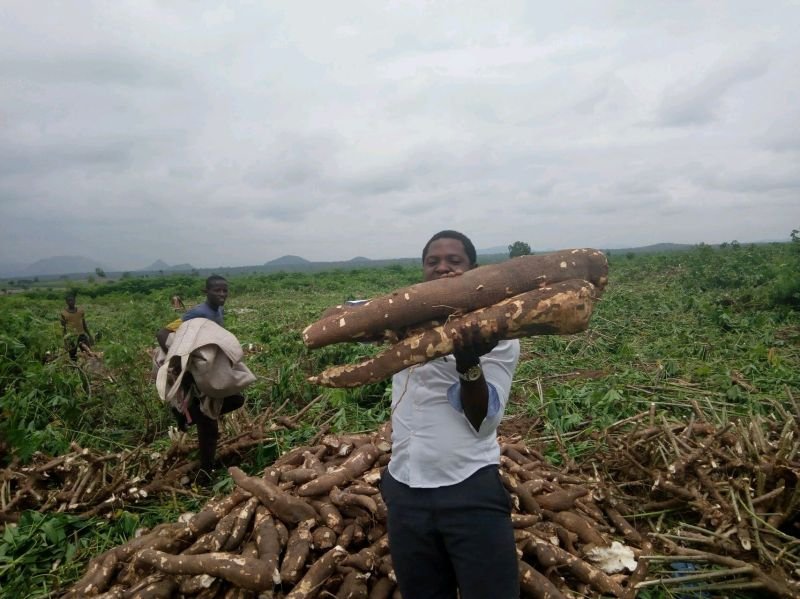
- Roots (tubers) are firm, large, and well-developed.
- When a few sample plants are uprooted, the tubers appear mature, with thick and well-formed roots.
How to Harvest Cassava Properly
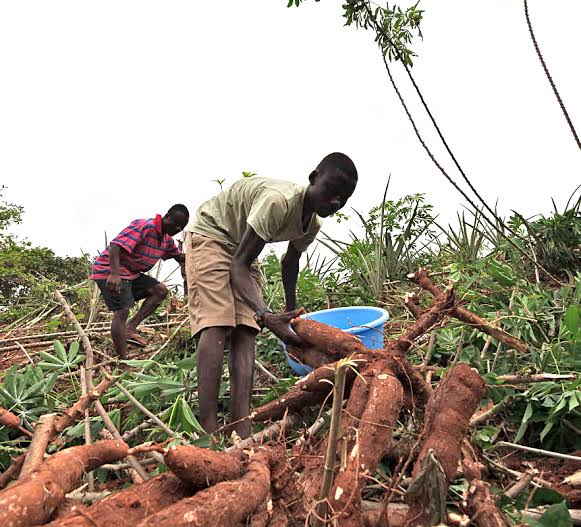
Harvesting cassava the right way helps reduce root damage and increase profit. Follow these steps:
- Cut the stems first:
Cut the cassava stem 20–30 cm above the ground before pulling out the roots. The stems can be saved for the next planting season. - Loosen the soil:
Use a hoe or digger to loosen the soil around the plant gently. - Uproot carefully:
Hold the remaining stem and pull the plant out to avoid breaking the roots. - Sort and clean:
Remove damaged or rotten roots and clean the healthy ones before selling or processing.
Post-Harvest Tips for Cassava Farmers
- Process quickly: Fresh cassava roots begin to deteriorate within 2–3 days after harvest, so process or sell them fast.
- Store properly: If storage is needed, bury the roots in moist soil or store them in shaded, cool areas.
- Replant healthy stems: Use disease-free stems from high-yield plants for the next planting cycle.
Conclusion
For young cassava farmers in Nigeria, understanding that cassava is ready for harvest between 8 and 12 months after planting is key to success. Early harvest may lead to small tubers, while late harvest can cause root decay. Always monitor the variety and soil condition to determine the best harvest time.
By following these simple cassava harvesting practices, you can maximize yield, improve profit, and build a sustainable cassava farming business in Nigeria.