Poultry Feed and Reducing Feed Costs: A Practical Guide for Young Nigerian Poultry Farmers
Feed is one of the biggest expenses in poultry farming. Whether you are keeping broilers, layers, cockerels or local chickens, poor feed management can quickly reduce your profit.
For a young poultry farmer, the goal is not simply to find the cheapest feed. The goal is to provide balanced nutrition at the lowest practical cost while preventing wastage and poor growth.
1. How to Formulate Broiler Starter Feed
Broiler starter feed is normally given to young broilers during the early growth stage. Chicks need sufficient protein, energy, amino acids, vitamins and minerals for rapid development.
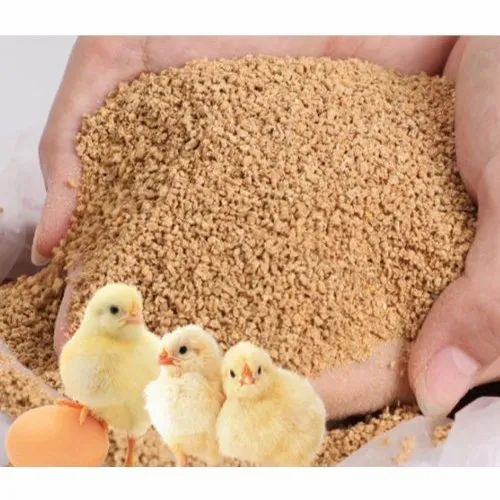
Common ingredients include:
- Maize or another suitable energy source
- Soybean meal or another good protein source
- Fish meal where appropriate
- Wheat offal
- Bone meal or another phosphorus/calcium source
- Limestone
- Premix
- Salt
- Amino acids such as methionine and lysine where required
- Vegetable oil where additional energy is needed
Do not formulate feed simply by mixing ingredients by guesswork. The nutrient requirements of the birds should determine the quantities.
For commercial production, use a reliable feed formulation program or consult a qualified animal nutritionist.
2. How to Formulate Broiler Finisher Feed
Broiler finisher feed is designed for the later growth period when birds are approaching market weight.
The formula generally changes from starter feed because the bird’s nutritional requirements change as it grows.
A good finisher ration should provide:
- Adequate energy
- Appropriate protein
- Essential amino acids
- Calcium and phosphorus
- Vitamins and minerals
- Good digestibility
Reducing protein excessively just to save money can result in poor growth and worse feed efficiency.
3. How to Formulate Layer Feed
Layers have different nutritional needs from broilers because they must produce eggs consistently.
Layer feed should provide adequate:
- Energy
- Protein
- Calcium
- Available phosphorus
- Amino acids
- Vitamins
- Trace minerals
Calcium is particularly important for eggshell formation. If a layer ration does not provide sufficient calcium, farmers may notice thin shells, soft-shelled eggs or reduced egg quality.
Never copy a broiler feed formula and use it for layers. The birds have different nutritional requirements.
4. How to Formulate Chick Mash
Chick mash is formulated for young chicks and should contain the nutrients needed for rapid early development.
A basic chick ration may contain an energy ingredient such as maize, a protein source such as soybean meal, mineral sources, vitamin-mineral premix and essential amino acids.
The exact formula should depend on the nutrient specifications of the ingredients available to you.
Remember that a cheaper formula is not necessarily a better formula. If chicks grow slowly because the feed is nutritionally inadequate, the money saved on feed can be lost through poor performance.
5. Cheap Poultry Feed Ingredients in Nigeria
Depending on location, availability and quality, Nigerian farmers may consider ingredients such as:
- Maize
- Sorghum
- Wheat offal
- Rice bran
- Soybean meal
- Groundnut cake
- Palm kernel cake
- Fish meal
- Cassava products
- Vegetable oil
- Limestone
- Bone meal
- Suitable local protein and energy ingredients
Prices vary considerably between regions and seasons.
Before buying an ingredient in bulk, compare its cost per unit of usable nutrients, not just the price per kilogram.
An ingredient that costs less per kilogram may actually be more expensive after accounting for its protein, energy, digestibility and possible anti-nutritional factors.
6. Alternative Ingredients to Maize in Poultry Feed
Maize is an important energy ingredient, but farmers sometimes need alternatives when maize prices become high or supply is limited.
Potential alternatives include:
- Sorghum
- Wheat by-products
- Rice bran
- Cassava-based ingredients
- Other locally available energy ingredients that are safe and properly processed
However, substitution should not be done blindly.
Different ingredients have different levels of energy, protein, fibre, moisture and anti-nutritional factors. A nutritionist should adjust the complete ration when replacing a major ingredient.
7. How Much Feed Does 100 Broilers Eat?
There is no single figure that applies to every flock.
Feed consumption depends on:
- Breed or strain
- Age
- Target market weight
- Feed quality
- Temperature
- Health
- Management
- Feed wastage
As a rough practical guide, a broiler may consume several kilograms of feed over its production cycle. Therefore, 100 birds can consume hundreds of kilograms of feed before sale.
The most useful method is to record how much feed your flock receives each day and compare it with body-weight gain.
Do not use feed consumption alone to judge performance. A flock eating a lot but gaining little weight may have poor feed conversion.
8. How Much Feed Does a Layer Eat Per Day?
An adult layer commonly consumes roughly 100–120 g of feed per bird per day, although actual intake varies with breed, body size, temperature, egg production and feed energy density.
For example, 100 layers consuming 110 g each would require approximately:
100 × 110 g = 11 kg per day.
Over 30 days, that is about:
11 × 30 = 330 kg of feed.
This is why feed efficiency is extremely important in layer farming.
9. How to Reduce Feed Wastage
Feed that falls on the floor is money lost.
To reduce wastage:
Do not overfill feeders
Fill feeders to an appropriate level rather than filling them to the top.
Use the correct feeder
Feeders should match the age and size of the birds.
Position feeders properly
Keep them at an appropriate height so birds can eat comfortably without scratching excessive feed out.
Prevent rodents
Rats and mice can consume significant amounts of feed and contaminate it.
Store feed correctly
Keep feed in a dry, clean and protected area.
Monitor daily consumption
Record how much feed enters the poultry house and how much remains.
Avoid unnecessary feed changes
Sudden changes can affect feed intake and flock performance.
10. Common Homemade Poultry Feed Mistakes
Young farmers often make mistakes when producing their own feed.
Common problems include:
- Guessing ingredient quantities
- Using poor-quality ingredients
- Using mouldy maize
- Using excessive fibre
- Ignoring amino acid requirements
- Leaving out vitamin-mineral premix
- Incorrect calcium-to-phosphorus balance
- Using too much of one ingredient
- Failing to consider anti-nutritional factors
- Poor mixing
- Storing finished feed in damp conditions
One of the most dangerous mistakes is assuming that “natural” automatically means safe.
Mouldy or contaminated ingredients can seriously affect poultry performance and health.
11. Broiler Feed Chart From Day-Old to Market Weight
A simple management guide is:
| Age | Typical Feed Stage | Main Goal |
|---|---|---|
| Day-old–2 weeks | Starter | Strong early growth |
| 3–4 weeks | Starter/Grower depending on program | Muscle and frame development |
| 5–6 weeks | Finisher | Rapid weight gain |
| 7 weeks+ | Finisher where birds are kept longer | Reach target market weight |
The exact changeover age should follow the feed manufacturer’s specification or your nutritionist’s formulation.
Do not change feed simply because a particular day has arrived if the birds’ production program recommends otherwise.
12. Layer Feed Chart by Age
Layer feeding generally follows the bird’s development:
| Age | Feed Type | Purpose |
|---|---|---|
| 0–6/8 weeks | Chick starter/mash | Early growth |
| 7/9–18 weeks | Grower/developer feed | Skeletal and reproductive development |
| Around point of lay | Pre-layer where appropriate | Prepare birds for production |
| Point of lay onward | Layer feed | Egg production and maintenance |
The exact ages vary according to breed, management system and feed program.
Do not rush pullets into layer feed simply because they are getting older. They need proper body development before laying.
13. How to Calculate Your Poultry Feed Cost
A simple calculation is:
Feed cost = Quantity of feed used × Cost per kilogram
For example, if your flock uses 500 kg of feed and the average cost is ₦700/kg:
500 × ₦700 = ₦350,000
But your real feed cost per bird is even more useful:
Feed cost per bird = Total feed cost ÷ Number of birds sold
You can also calculate feed cost per kilogram of live weight produced.
This helps you compare different feeds and management systems.
14. Feed Conversion Ratio: A Number Every Broiler Farmer Should Understand
Feed Conversion Ratio (FCR) shows how efficiently birds convert feed into body weight.
The basic calculation is:
FCR = Feed consumed ÷ Weight gained
For example, if a broiler consumes 4 kg of feed and gains 2 kg of body weight:
FCR = 4 ÷ 2 = 2.0
Lower FCR generally means better feed efficiency, assuming the comparison is made under similar conditions.
Poor FCR can be caused by:
- Poor-quality feed
- Disease
- Excessive heat
- Poor genetics
- Poor water supply
- Feed wastage
- Poor housing
- Overstocking
- Incorrect feeding programs
15. Water Is Part of Feed Management
Never focus on feed while ignoring water.
Birds need clean, accessible water for digestion, metabolism and normal production.
If water intake is reduced because drinkers are dirty, empty or poorly positioned, feed intake and growth can also suffer.
Check drinkers every day.
16. How Young Farmers Can Reduce Feed Costs Without Hurting Growth
The best approach is to improve feed efficiency, rather than simply buying the cheapest feed.
Focus on:
- Buying quality ingredients.
- Reducing wastage.
- Preventing disease.
- Providing clean water.
- Maintaining proper stocking density.
- Controlling excessive heat.
- Monitoring body weight.
- Recording feed consumption.
- Comparing suppliers.
- Using properly formulated rations.
- Keeping rodents away from feed stores.
- Avoiding unnecessary feed changes.
Final Advice for Young Poultry Farmers
Feed can determine whether your poultry business makes a profit or loses money.
Do not choose feed based only on the price of a bag. Consider nutritional quality, feed intake, weight gain, egg production, mortality and feed conversion.
If you are making your own feed, learn basic feed formulation and work with a qualified animal nutritionist when necessary. The objective should always be to produce healthy birds efficiently—not simply to make the cheapest possible feed.
Remember: cheap feed is not always cheap production. Good feed management is about getting the best performance from every kilogram of feed you buy.
Leave a Reply